Tuesday, March 3, 2015

The Top Ten Live Rock Albums of All Time

I would like to retell the entire history of Rock Music. I was there for the entire thing. It’s embedded in my mind like a reflex action. Hit my head with a rubber mallet, and like a knee jerk, the music will appear. Starting in the 50’s when the 78 was replaced with the 45 and the long play 33 through today's streamed tunes, this is/was Rock and Roll. Back then studios were still primitive and the music matched that simple structure. Stereo was considered new fangled and 8-track tapes were still on the horizon.

As music progressed, new ideas and new sounds abound. Not just the musical influences from African-American genres such as blues, boogie woogie, jump blues, jazz, and gospel music, together with Western swing and country music, but many more influences were felt. Though elements of rock and roll can be heard in blues records from the 1920s and in country records of the 1930s, the genre did not acquire its name until the 1950s. Do Wop and harmonies were added to guitars and drums and the new sounds of the electric bass merged with keyboards of all types. Horns, flutes, and other instruments also stared in this new music. The beat was always the key and 4/4 time was king. (Can you name the Doors song that's 3/4?)

By the sixties such new influences as folk music, reggae, latin, and even symphonies were prevalent. Rock operas began to appear and concept albums were the thing. Concerts had always been part of the business. Make a record and then go out and promote it. Then something wonderful happened: the “Live Album.” Rock music always was (and always will be) a live music phenomenon. I don't care how big the woofer is in the trunk of your car, you gotta go to the show to be in the know. Studios are nice, but real rock has an audience, and they don't wear earphones. They came to hear them play. They were part of the play. Play on.

These days, live albums are often just a means to cash in one last time on a highly successful tour. Back in the Seventies, however, a live album was a great way to create a superstar. Acts as diverse as Cheap Trick, Kiss, and Peter Frampton were all stuck at one level in their career before a monster live album forever changed their lives. Sure, sometimes they were doctored a bit in the studio, but few people cared. Songs like "I Want You To Want Me" and "Show Me the Way" popped on a concert stage in a way they never could have in a sterile recording studio. This, then, is my list of the ten live albums that rocked Rock. Your mileage may vary.

Live Bullet

It took Bob Seger a really, really long time to find a wide national audience. Back in 1968 he scored a decent-sized hit with the garage rock classic "Ramblin' Gamblin' Man," but after that his career took a nosedive. He toured at a relentless pace and released roughly an album a year, but nothing seemed to connect. In September of 1975 he taped a two-night stand at Detroit's Cobo Hall, releasing it as Live Bullet in stores the following April. The first time the wild energy of his stage show was captured on tape, the set included the haunting "Turn the Page." The album reached Number 34 on the Billboard chart, and when Seger released Night Moves later that year he found himself with a huge fan base.

The Last Waltz

Robbie Robertson was only 33 in the fall of 1976, but he'd been on the road since he was a teenager. He wanted off. The other guys in the Band didn't totally agree, but they did agree to participate in a grand farewell show at San Francisco's Winterland Ballroom on Thanksgiving Day. Martin Scorsese (who worked on the Woodstock movie before he became famous) agreed to direct a documentary about the gig. The biggest names in rock were brought in to guest, including Bob Dylan, Neil Young, Eric Clapton, Van Morrison, and Joni Mitchell. It's widely considered one of the greatest rock documentaries of all time.

MTV Unplugged in New York
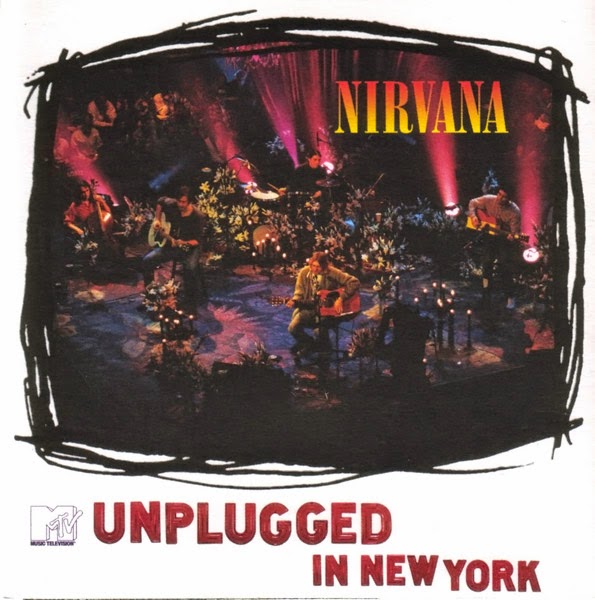
The Unplugged concerts certainly brought a different view of many music acts. Everybody from Roxette to Duran Duran and Queensryche taped MTV Unplugged specials in the Nineties. Nobody talks about any of those. Even Bob Dylan and Pearl Jam's Unplugged specials have largely been forgotten. Eric Clapton caused a big stir with his, but when is the last time anybody really played that thing straight through? At the end of the day, the only Unplugged with any real legs is Nirvana's. Taped in November of 1993 — five months before Kurt Cobain killed himself — the concert is one of the band's crowning achievements. They skipped most of the obvious hits (including "Smells Like Teen Spirit") and focused on covers of songs by Lead Belly, David Bowie, and the Meat Puppets. They even invited the Meat Puppets onstage for a few songs, even though few MTV viewers had ever heard of the group. It's impossible to say how Nirvana would have evolved had Kurt lived, but Unplugged in New York is proof positive they had plenty more to say.

Waiting For Columbus

Little Feat is one of those bands that can't be fully appreciated until you see them live. It's no surprise that their 1978 live disc Waiting for Columbus is the most beloved album in their vast catalog. Taped on their 1977 world tour, the double LP features extended arrangements of "Dixie Chicken," "Tripe Face Boogie," and other Little Feat standards. The Tower of Power horn section was playing with the band at the time, and their presence greatly enhances the material. Little Feat never became true household names like many of their peers, but anyone who spends time with this album will be quickly converted. On Halloween of 2010, Phish played the album straight through in Atlantic City, and then the next year Little Feat themselves performed it.

Made in Japan

I’m a crazy fan of Deep Purple. As a guy who loves a Hammond and any other keyboards you happen to have, just give me Jon Lord, a wizard. Other members of the band came and went, but that Hammond sound. Lip smackin’ good.

The classic Ian Gillan-led lineup of Deep Purple (dubbed Deep Purple Mark II by the fans) had only been on the road for three years when they hit Japan in 1972. It was a very fruitful time for the band. They had three incredible albums under their belts (In Rock, Fireball and Machine Head), and their live show was absolutely stunning. They had no intention of making a live album, but they were talked into releasing material taped in Osaka and Tokyo for a Japanese-only live album. Their label loved it and released it worldwide. These are the definitive versions of "Highway Star," "Child in Time," and other Deep Purple classics. They've done countless shows since in countless permutations, but they've never sounded quite this perfect.

Alive!

KISS was not an early favorite of mine. My cousin Chuck was a big fan, so I followed up on his recommendations. Over the years my opinion has shifted a bit. Still not a favorite band, but this is a favorite album.

I suppose to really understand the power of Kiss, you have to see them live. They built their reputation on the road, breathing fire, spitting blood, and hovering above the audience on wires. Nobody had ever seen anything like it. (Unless, that is, they'd seen Alice Cooper a few years earlier.) Their songs were also light years better onstage than on record, so they made the smart decision to tape a bunch of gigs in mid-1975. In typical Kiss fashion, they hedged their bets by doctoring the tapes in the studio afterwards. Today, nobody is quite sure what parts of Alive! were actually taped live. It hardly matters. The album was a monster success. It flew off the shelves and instantly made them one of the biggest bands in the world. Kiss gets a lot of crap these days as just too commercial — more businessmen than musicians. Much of it is deserved, but it's hard to deny that songs like "Cold Gin," “Deuce," and "Black Diamond" are classics. They've never sounded better than they did on Alive!

Get Your Ya-Ya’s Out!

The world’s greatest bar band has put out a lot of good albums and a lot of good shows. They’ve also had more comebacks than Richard Nixon. The Stones had been off the road for two long years before their 1969 American tour in support of Beggar's Banquet. During that time Mick Jagger and Keith Richards had been arrested on trumped-up drug charges, Their Satanic Majesties Request had failed to deliver, Brian Jones had left the group (and later died), and Mick Taylor became their new guitarist. They also recorded some of the finest music of their long career.

The tour was a long time coming, and up until Altamont it had been a complete triumph. They packed large venues all across the country and in many ways laid the groundwork for all arena tours that followed. This was also the time when bootlegs started popping up in record stores, most notable Live'r Than You'll Ever Be, which was taken from a 1969 Stones show in Oakland. The obvious move was to release their own live album from the tour. Get Yer Ya-Ya's Out! was taken from shows in Baltimore and New York, though some of the vocals were touched up later in the studio. The Stones have released many live albums since this one, but none have sounded quite as vital. That’s the point of a live album … vital!

Frampton Comes Alive!

Remember that line from Wayne's World 2? "Everybody has Frampton Comes Alive," Wayne said when going through some old vinyl. "If you lived in the suburbs, you were issued it. It came in the mail with free samples of Tide." In 1976 the live album — taped on Frampton's 1975 summer tour — spent 97 weeks on the Billboard charts, selling millions of copies.

The former Humble Pie frontman had some minor solo success before the release of the double live album, but nobody saw the explosion of Frampton Comes Alive! coming. Singles "Show Me the Way," "Baby, I Love Your Way,” and the 14-minute "Do You Feel Like We Do" went into super heavy rotation on radio. He was loved by teenage girls, and their older brothers. He owned the year 1976 like nobody else in rock, but by the time he dropped I'm In You the following year the madness had subsided. Ten years later he found himself playing guitar in David Bowie's backing band.

Live at the Fillmore East

Seven months before Duane Allman died in a motorcycle accident, the Allman Brothers Band played a two-night stand at New York's Fillmore East. The resulting live album captured the original lineup of the band at their absolute peak. "Whipping Post" lasts 23 minutes, while "Mountain Jam" goes well past half an hour — but in both cases the energy never lets up for an instant. Producer Tom Dowd is responsible for the glorious sound and clean mix of the LP. It's impossible to even tell that some songs were shortened, and in some cases he even combined two takes of the same song into one. A while back the group (now down to just two original members) played the whole set at the Beacon Theater in honor of the LP's 40th anniversary.

Live at Leeds

You know that the Who’s greatest fan … that’s me, is going to pick their legendary live album. In late 1969, Pete Townshend made one of the dumbest decisions of his life. The Who had been contemplating a live album to chronicle their Tommy world tour. Thirty-eight shows were recorded in pristine sound quality, but Pete didn't feel like going through all of them to find the best one. Instead, he decided to tape two upcoming shows at Leeds and Hull in England. He ordered sound engineer Bob Pridden to burn all 38 shows from 1969. "It was a dumb decision commercially and historically," Townshend writes in his memoir, Who I Am. "Bob faithfully destroyed them in a bonfire in his garden."

Thankfully, the shows at Hull and Leeds were recorded and preserved. Entwistle's bass didn't get properly recorded at the beginning of the Hull show, so the Leeds show was released. At the time, the group felt that Tommy had overshadowed all their other work. Live at Leeds didn't have a single cut from the rock opera, even though they played the bulk of it at the show. Instead, it featured covers like Mose Allison's "Young Man Blues," Johnny Kidd's "Shakin' All Over,” and Eddie Cochran's "Summertime Blues." Side two began with a 14-minute "My Generation." This was the Who at their absolute peak as a live band.

And that’s it. My take on the ten greatest live albums of all time … MY TIME. And what are your picks?

Sunday, March 1, 2015

Honda Four

The ubiquitous Honda Four. Honda first released their original four cylinder motorcycle, the CB750, in 1969. (Technically the design is termed an “inline, transverse mounted, four cylinder” engine.) This bike, with just a few changes, mainly going from single overhead cam to double overhead cam in 1979, was sold right into the 21st century. In 2007 Honda was still selling the CB750 (at least in Japan) and a larger version of the four cylinder bike is still being made in 2015.

The successful design spawned many imitations from other Japanese brands as well as sister bikes from Honda. The term “superbike” was pretty much coined to describe the CB750, and this bike cemented Honda as the greatest motorcycle company in the world. Although a few riders would identify some other brand, Honda pretty much owns the title for producing the most sophisticated and technically advanced bikes around. Certainly they are the biggest seller of motorcycles and motorbikes in the world, a title they’ve held for several decades.

One of my favorite bikes of all time was my Honda 550 Four. It fit me so well and was a great around town bike. I also rode it from Denver to Lewistown, Montana, but it was a bit small for that trip. The smoothness and sound of that engine were unsurpassed at that time, and the reliability was legendary.

Four cylinder motorcycles are not new. Belgian arms manufacturer FN Herstal, which had been making motorcycles since 1901, began producing motorcycles with inline-fours in 1905. The FN Four had its engine mounted upright with the crankshaft longitudinal. That is, the pistons were in line with the front and rear tires. Other manufacturers that used this layout included Pierce, Henderson, Ace, Cleveland, and Indian in the United States, Nimbus in Denmark, Windhoff in Germany, and Wilkinson in the United Kingdom.

In those days internal combustion engines were not high efficiency performers, so it took a large displacement to produce adequate horsepower. Yet these all put the cylinders longitudinal to keep the overall design of the bike narrow. This meant the rear cylinders didn’t get as much airflow as the front causing problems with cooling. There were also torque effects with this design.

The 1923 design by Carlo Gianini and Piero Remor was the engine that fist demonstrated the transverse mount. After a slow start — it took until 1926 to get the motor up and running — it became the basis of the OPRA 500 GP bike in 1928 and eventually turned into the Gilera Rondine in 1935. The layout was a winner, and that engine was the basis of Gilera’s racers right into the 1970s!

The modern inline four-cylinder engine, mounted across the frame, has become virtually the default layout for today’s large bikes. Sure, there are plenty of alternatives, but the transverse four is one of the designs that’s closest to perfection, whether it’s in a Yamaha M1, a Kawasaki Z1, or an old Honda CB750.

The original Honda four produced 68 HP at 8,500 rpm which propelled its 481 pounds to a top speed of 125 mph. (These figures vary slightly from year to model year and with the test organization. I never had one, so I can’t contradict these values.) When Honda first brought this bike to market they weren’t sure how successful it would be, so they didn’t invest in high quality tooling. Now those original CB750s with what is often miss-named as “sand cast” engines demand the highest amount on the restoration market, some in the $30,000 price range for a bike that cost around $1,500 when first released.

This first model had a dry sump, which means the oil is stored in an external tank. This allows the engine to be a little lower in the frame because the bottom oil pan doesn’t have to store a lot of oil. Dry sump designs also provide some additional cooling in the circulation of the oil to an external tank, and it is easy for the manufacturer or an after market supplier to add an oil cooler. Later variations of the original Honda four had the simpler wet sump design.

Under development for a year, the CB750 had a transverse, straight-four engine with a single overhead camshaft (SOHC) and a front disc brake, neither of which was previously available on a mainstream, affordable, production motorcycle. Adding to the bike's value were its electric starter, kill switch, dual mirrors, flashing turn signals, easily maintained valves, and overall smoothness and low vibration both underway and at a standstill. Ten years later Honda added dual overhead cams to the CB750, and later models, from 1991, included maintenance-free hydraulic valves. Many of these features were unique in 1969, and now are the norm for most performance machines.

The angled-forward 736 cc engine design used many lessons learned during Honda's days of racing multi-cylinder machines in the Sixties, although the roadster relied on a single overhead camshaft and two valves per cylinder, in contrast to the racers with their twin cams and four valves per cylinder. The original engine was slightly under square with a 61 mm bore and a 63 mm stroke with 9.0:1 compression. Equipped with 4 - 28 mm Keihin carbs, the overhead cam was driven by a chain with a manual adjuster. The primary drive is gear and the secondary drive is chain. Disc brake in the front 19” wheel and drum in the back 18” drive wheel.

In 1975 Honda added a newer trim version of the basic bike called the Super Sport or CB750F. Those models had Honda’s own Comstar wheels and were sold from ’75 to 79. My favorite from that era had a black engine and canary yellow paint. It was a very pretty bike with a four-into-one pipe and a nice tailpiece behind the seat.

In 1979 Honda released the new CB750F with a dual overhead cam. I am not a fan of the trim on this bike as the tank flows into the side covers which extend onto the back. One might consider that a very modern and clean design, but I guess I'm just old fashioned preferring the previous styling. The seat was also redesigned, but — again — I’m not a fan of the overall style. This model continued on to 1986. A slightly different model called the CB750F2 was released in 1992 and produced for five years.

The latest model of 750 Four was the Nighthawk which was produced from 1991 to 2003. Although the 700cc Nighthawk (sized to avoid the 45% tariff for larger bikes) had the same basic DOHC engine of the earlier CB750s, this bike had a 6-speed transmission, hydraulic valve lifters, shaft drive, front bikini mini-fairing, gear indicator, and 16" front wheel. In 1984, the bike retailed at a MSRP of $3,398.

In 2007 Honda Japan announced the sale of a new CB750 very similar to the models sold in the 1970s. Announced as the CB750 Special Edition that was in the silver colors of the CB50 AMA racer of the 1970s and the CB750. It was offered in three color schemes reminiscent of CB750s previously sold. These bikes were intended only for release in Japan. Will we ever see a brand new version of this popular bike? That is the question.

In ’81 Honda introduced the CB900F. Style was reminiscent of the 750 but the new 901cc engine added humph. With 95 HP at 9,000 rpm and the four Keihin 32mm constant velocity carburetors, this was a bike to be reckoned with. But things were changing in the early eighties, so this bike was only produced for two years.

You see, early in the 80s a certain motorcycle company in Milwaukee started to complain to their congressmen that they couldn’t compete with the influx of Japanese large iron and got congress to pass a tariff on bikes larger than 700cc. Honda responded with the CB700SC Nighthawks. These toned down bikes had 696 cc displacement and a top speed of 147 mph. Again Honda went a little Disneyland in their styling adding a squared off headlight and miniature fairing to the front many compared to a bra. They also replaced the chain drive with a shaft and upped the ante to a six-speed transmission.

1983 would prove to be the final tariff-free year for foreign motorcycle manufactures before implementation of the five-year tax on foreign motorcycles over 700cc. Honda released the CB1000C that year. This was a continuation of the CB900C in many ways, but carried additional displacement to its engine. Both “custom” and “cruiser” models were available. The 902 cc engine was increased to 973, but otherwise the bike was unchanged. Still a 5-speed transmission but with dual ranges. The rider could select between two sets of 5 gears to match requirements. The shaft drive and a lengthy 64 inch wheelbase delivered a stable ride, while the 608 pounds limited performance somewhat, although 121 mph was listed as top speed.

The follow-on Honda CB1100 is a 1,062 cc (64.8 cu in) air-cooled inline four-cylinder naked bike that was introduced by Honda in 2010 as a modern successor to the CB750. At introduction the motorbike was available in Japan, Australia and New Zealand; it was later introduced to Europe and the US in 2013.

The CB1100 is styled as a universal Japanese motorcycle. The model underwent a revision in 2014, gaining a sixth gear and new gauge cluster. Honda also released the CB1100 Deluxe, an upgraded variant on the standard CB1100.

That's a 2014 CB1100 in the picture at the start of this article. The 2015 looks the same. Here's what Honda says in their brochure:

Though the CB1100 pays homage to Honda's long line of capable, reliable and fun street bikes, we wouldn't look to the past without looking forward. This is a modern bike for riders that love to ride. Its 1140cc, fuel-injected inline four is powerful and smooth, its chassis and suspension are agile and responsive, and it's comfortable around town or on weekend rides. For 2014, we're offering a Deluxe model with even more features. It’s a bike a whole new generation of riders is going to appreciate.

In addition to the new six-speed transmission on all CB1100s, this year, there's a Deluxe model that adds twin exhaust pipes, a slightly larger fuel tank, and a stitched-look seat. The Deluxe model also comes with ABS [automated braking system].

Honda’s inline-fours are timeless — some of the best engines in all of motorcycling. The CB1100 carries that tradition and takes it to the next level, displacing 1140cc and featuring air cooling to look the way many think a bike should — why hide under a fairing?

This is the largest Honda went with this basic inline four design. They did produce a six-cylinder, inline engine powered bike from 1979-82 called the CBX, but that was more a demonstration of technology than a serious bike since Honda was making and selling plenty of water cooled large bikes in its Gold Wing line first introduced with an opposing four engine in 1974 which continued to increase in size until it was replaced by the six-cylinder version in 1987. Today Honda still makes cruiser and touring versions of the Gold Wing with a maximum displacement of 1832 cc. That’s one big bike, but not part of the inline four family.

Honda’s history seems to be a quest to produce a motorcycle for every particular want or need out there. How else do you explain the single cylinder “Tourist Trophy 500” and the various unusual designs of V-twins from horizontal like a Moto Guzzi to V-fours and water cooled designs of many shapes and sizes. Meanwhile, the inline, air-cooled four design was expanded on and new versions and sizes were released every few years.

After introducing the four-cylinder CB750 motorcycle in 1969, Honda followed with a string of lighter fours featuring engines as small as 350 cc (CB350 Four, CB500 Four), and the CB400F 408 cc Four, produced in 2 models.

The popular air-cooled four spawned smaller siblings starting with the CB500 released in 1972. It is similarly styled to the CB750, but smaller and lighter, with an output of 48 bhp and a manufacturer's specified top speed of 102 mph. This original design was produced for two years

Like the earlier CB750 it sported a single front hydraulic disc brake, rear drum brake, electric starter, and SOHC eight-valve engine. The four-into-four exhaust pipes echoed those of the CB750. It was deemed a better handling bike than the larger model, although it was still no featherweight at 443 lb dry.

Unlike the earlier dry sump CB750, the smaller bike has a wet sump engine. Also, the primary drives were different, the CB750 having a duplex chain, while the CB500 had a "Hy-Vo" Morse chain.

Several CB500 machines were entered in the Production TT races on the Isle of Man in the early 1970s. Bill Smith won the 1973 500 cc TT Production race (four laps) riding one, 8.2 seconds ahead of second place Stan Woods mounted on a Suzuki T500 two-stroke twin.

The CB500 was a 498 cc (30.4 cu in) displacement machine. In 1974 the Honda CB550 with a 544 cc (33.2 cu in) four-cylinder was produced until 1978 when it was replaced by the CB650 increasing displacement to 626 cc by boring out the 550 block. Honda added domed pistons and produced 63 hp @ 9,000 rpm. The CB650's performance was comparable to contemporary DOHC 750 cc motorcycles because of it being built on the lighter, more compact chassis of the CB550. It was Honda's last SOHC aircooled straight-four engine, which was a culmination of the engine technology of Honda up to that time.

Like the earlier CB500 the original CB550K had 4 exhaust pipes and 4 silencers. The CB550K went through some minor iterations, the last being the CB550K4. Shortly after the CB550K was introduced, a second version of the CB550 was offered, the CB550F "Super Sport”.

The Honda CB650 is a four-cylinder middleweight motorcycle manufactured from 1979 to 1985 by Honda. The machine was largely based on the Honda CB550 and had the same frame, speedometer, and tachometer as the Honda CB550 of the 70's.

In 1973, Honda downsized the venerable four yet again with a very sporty model called the CB350. This smallest version of the inline, air-cooled, transverse engine was a 347 cc motorcycle based on the larger versions of the day. The motorcycle was manufactured in Japan from 1972 to 1974. In 2012, Motorcycle Classics magazine said the 350F was "the smallest displacement multi-cylinder motorcycle ever to enter into full-scale production." There were no changes to the 1973 model, but Honda designated the 1974 bike the CB350F1.

Soon after production was discontinued, it was replaced by the CB400F. Although Honda had a 350 Twin that critics said was more powerful, lighter, and cheaper, many felt the 350 Four was faster and smoother running.

The apparent fact that Honda was “fine tuning” their product line is indicated by the fact that the CB350F wast the successor to the CB500F and was predecessor to the CB400F. The Honda CB400F was made by Honda from 1975 through 1977.

For the most part, the CB400F was simply an upgraded version of the 350 model from the previous year. The most striking change was the swoopy four-into-one exhaust system that snaked around the frame, converging into a single muffler on the right side of the bike. Check the end of this article for a picture of that fine exhaust system. Also noticeable were the angular fuel tank and flat cafe-style handlebars, all of which gave the bike a more racer-like look and feel than the rather pedestrian 350.

Although aimed at the sporting segment of the market, the four-stroke CB400F did not have the acceleration of the competition's two-strokes, particularly the triples from Kawasaki. But what the CB400F engine lacked in power it made up for in refinement, the small-displacement four-stroke being smoother, quieter and much more economical than the two-strokes. To help keep the engine in its power band, Honda employed a six-speed transmission — something of a rarity at the time.

The CB400F was a very successful motorcycle in club or privateer racing. Kaz Yoshima and other racers were able to take Honda's little 408 cc engine up to 490 cc and with the addition of other racer options, this small bore was considered a “giant killer.”

That is the evolution of the versatile and popular transverse, inline four from Honda. Over the nearly 50 years of its production it went from a single overhead cam design to DOHC. Honda added hydraulic valves, fuel injection, electronic ignition, and even some fairing as the basic design was improved and expanded. Four valves per cylinder and automatic primary chain adjustment are just a few of the performance and reliability enhancements added since the original CB750.

The transmission went from 5-speed to 6 and there was even an automatic transmission available at one time. The original CB750 pioneered disc brakes and the latest versions even add Automatic Braking Systems. (The first disc brake was actually on the CB450K3 model, and that led the way for the CB750 released that same year.)

Still for sale today, a popular 1100 cc version has continued its role as the successor to the first “superbike.” Although I personally find the larger Honda fours both too wide and with a seat that is a bit too high, leaving me looking at V-twin designs, the smoothness and power of this engine, as well as its superb reputation for performance and reliability makes it a very popular bike for current riders as well as nostalgic collectors.

Hard to imagine how old this basic design is. It's approaching 50 years since it was first produced. Also hard to imagine the impact the Honda Four had on the riding public. Many beautiful design examples exist, but my personal favorite is the serpentine bent pipes on the CB400F. No modern sculpture in the Louvre or the Metropolitan Museum brings as much emotion to me as that sculptured metal and the promise it holds for a fast and joyous ride. With a roar like a European sports car, a Honda Four will still turn heads even in this high-tech, computer saturated 21st century. I'll take one in the canary yellow please.

HONDA FOUR COMPARISONS


1973
CB350
1975
CB400F
1972
CB500
1969
CB750
1982
CB900F
1983
CB1100F
Disp. 325 cc
19.9 ci
408 cc
27.1 ci
498 cc
30.4 ci
736 cc
44.9 ci
901 cc
55.0 ci
1062 cc
64.8 ci
HP
@ rpm
36
10,500
43
8,500
48
8,500
68
8,500
95
9,000
108
8,500
Weight 328 412 443 481 514 536
MPG 55 50 45 35 32 30
0 - 60 sec 6.5 6.3 6.0 5.2 4.5 4.0
1/4 Mile Sec
Speed
15.0
80
14.7
89
14.1
92
13.3
105
11.8
110
11.1
118
Trans. 5-spd 6-spd 5-spd 5-spd 5-spd 5-spd
Top Speed 98 106 110 125 130 138
Price New $1100 $1200 $1270 $1495 $3495 $3698

CB500 updated to CB550 in 1974

Saturday, February 21, 2015

Venus

Venus has an interesting ancient astro-nomical history. Since it is inside our orbit around the sun, it only appears in the night sky near the sun. That means the early evening just after the sun sets and the early morning just before sunrise. (As all school kids know, we’re the third planet from the sun. First is Mercury, then Venus, then Earth, and then Mars.)

Ancient people often thought it was two different “stars” because they could not track its complete motion across the annual sky due to daylight. So it was often given two different names, “morning star” and “evening star.”

As ancient people studied the sky more carefully, they realized that most of the points of light or stars were fixed relative to each other and just rotated around with the time of night and the time of year. But a few of the bright lights moved relative to the fixed stars. These were given the name “planets” which means “wanderer" in Greek since they wandered in what appeared to be a fixed sky. The ancients identified Venus (possible twice as different morning and evening views). They also spotted Mars, Jupiter, and Saturn. Careful observation identified Mercury. So those were the six “planets:” Mercury, Venus, Mars, Jupiter, Saturn, and the Moon. Add the Earth and you get the “complete” number 7.

More study showed that the outer planets (ancients didn’t realize they were “outer”) had a strange retrograde motion at points in the year. That is, they moved backward. That kept them guessing for a long time until people figured out that the Earth is in orbit around the sun along with these wanderers. As the Earth “gained” on Mars, it appears to move backward like when you pass a slower car on the Interstate and the slower car appears to move backward compared to your point of observation.

The closer a planet is to the Sun, the faster it moves in its orbit. Therefore Venus revolves around the sun in only 225 days, while Mars takes nearly two years at 22.56 months. We "lap" Mars twice a year, giving it the greatest retrograde motion.

Heliocentric theory (the notion that the sun is at the center of the solar system, rather than the earth) was actually ancient knowledge, and astronomers in ancient Babylon and Egypt made fairly accurate diagrams of the solar system as far as they could see it with the naked eye as much as 3 or 4 thousand years ago. Early Europe, however, developed complicated theories of "geocentrism" involving crystal spheres to explain the motion including the retrograde part as "gears within gears."

Historically, "heliocentrism" was opposed to "geocentrism," which placed the Earth at the center. The notion that the Earth revolves around the Sun had been proposed as early as the 3rd century BC by Aristarchus of Samos, but at least in the post-Ancient world Aristarchus's heliocentrism attracted little attention — possibly because of the loss of scientific works of the Hellenistic Era when the library at Alexandria was burned in 391 AD. All this got muddied up with religious belief and common observation that the Earth does not appear to move.

Galileo Galilei got in big trouble with the Catholic church by supporting a heliocentric theory. He was forced to recant that position in a complicated religious and political process. There is a famous story that Galileo stated (possibly under his breath) "Eppur si muove," Italian for "and yet it moves" in 1633 after being forced to recant his claims that the Earth moves around the Sun rather than the converse during the inquisition. Probably not really true, but it does make a good story. He was in deep trouble for this belief, and I think he kept his mouth shut to literally "keep his head."

The modern heliocentric theory, which is more mathematical than the ancient parallels, is generally attributed to Nicholas Copernicus in the late 15th and early 16th Century, followed by Tycho Brahe and Johannes Kepler, who lived and worked in Germany in the 17th Century and refined the mathematical part of the theory. The heliocentric theory is also sometimes called the Copernican theory.

Newton then provided the mathematical and physical laws that explained the observations of Kepler (and corrected Kepler’s laws for what we call “center of mass,” but I digress) in his 1687 publication Philosophiæ Naturalis Principia Mathematica ("the Principia”), one of the most important scientific books of all time. It was still being used as a text book in the 20th century.

Venus shows phases like the moon. It is highest in the sky in the early morning and late evening when it is at “right angles” to our orbit of the sun. Imagine a big clock face with the sun in the center. Assume we are at 6:00. When Venus is around 9:00 relative to Earth it is the morning star and highest over the horizon before the sun comes up. When it is around 3:00 it is highest in the horizon in the evening and gains the name “evening star.”

In both of those cases it is actually a “half moon” in terms of phase and our position relative to the sun.

At this time of year in 2015, Venus dominates the Western sky during the early evening. It is a broad gibbous shape (that is a little less than a full disk) as it approaches opposition. In my example, about 11:00 on the clock face. So although it is farther away, a much larger percent of the planet’s globe facing us is lit by the sun. That is when it is at its brightest.

Because of its thick cloud cover it has a relatively high albedo. (Albedo is the fraction of sun light reflected from a planet. It is a measure of the reflectivity of the planet’s surface.) Venus has the highest albedo of any major planet in our solar system. Its albedo is close to .7, meaning it reflects about 70 percent of the sunlight striking it.

When the Earth’s moon is close to full in Earth’s sky, it can look a lot brighter than Venus, but the moon reflects only about 10 percent of the light that hits it. The moon’s low albedo is due to the fact that it is made of dark volcanic rock. It appears bright to us only because of its nearness to Earth. It’s only about 238,900 miles away, in contrast to between 66,782,000 miles to 67,693,000 miles for Venus depending on where the Earth and Venus are in their orbits.

Venus is so bright (it has a high albedo) because it’s blanketed by highly reflective clouds. The clouds in the atmosphere of Venus contain droplets of sulfuric acid, as well as acidic crystals suspended in a mixture of gases. Light bounces easily off the smooth surfaces of these spheres and crystals. Sunlight bouncing from these clouds is a big part of the reason that Venus is so bright.

By the way, Venus isn’t the most reflective body in our solar system. That honor goes to Enceladus, a moon of Saturn. Its icy surface reflects some 90% of the sunlight striking it. However, it is so far away, and so small, it is only visible by telescope. The Earth's moon (Luna) is the only moon in our solar system visible to the human eye.

Venus would present a full “moon” phase to us when it is in opposition, but that would put it on the other side of the sun from us … far away and blocked by the bright sun at mid-day. When Venus is closest to us, it presents its dark side and is quite invisible. The phases of Venus means it is most visible to us when it is on the far side of the sun from our orbit. 


(This is a lot easier to explain at the white board. Why don’t you all come over to my house, and I’ll give you the lecture.)

Friday, February 6, 2015

Physicists

In the world of particle physics, there is a clear divide between the theorists and the experi-mentalists. While all are interested in the same big questions — what is the fundamental nature of the world, what is everything made of, and how does it interact, how did the universe come to be and how might it end — the two specialties have very different approaches and tools.

The theorists develop new models of elementary particle interactions and forces, and apply formidable mathematical machinery to develop predictions that experimenters can test. The experimenters develop novel instruments, deploy them on grand scales, and organize large teams of researchers to collect data from particle accelerators and the skies, and then turn those data into measurements that test the theorists’ models. The work is intertwined, but ultimately lives in different spheres. I admire what theorists do, but I also know that I am much better equipped to be an experimentalist.

It is the rule of scientific advancement that a theory must fit all the known data and characteristics the theory attempts to explain, but must also predict some new behavior, phenomenon, or measurement. Einstein’s famous theory of General Relativity predicted that gravity would bend light. After the photographs of a solar eclipse demonstrated this phenomenon, Einstein’s theory was praised as “proven.”

However, unlike a mathematical proof, physical theories can only be validated, never proven. Every experiment and observation in the last 90 years has validated Einstein, but that doesn’t prove the theory correct. After all, Newton’s theory of gravity held for well over 200 years before Einstein demonstrated its weakness and corrected it for large masses and velocities. Just as Newton's laws had corrected the results of Kepler, allowing for a center of mass in orbital calculations, Einstein's theory makes small corrections to Newton.

The experimentalist also needs the theorist. In many cases the experiments are designed to verify (or falsify) a given theory. Like the right and the left hand, these two classes of physics practitioners work together to advance the realm of understanding and explain the natural world we all live in.

This dance between theory and measurement has occurred over and over throughout the history of science. Sometimes it is the experimentalist who leads as when the Michelson–Morley experiment demonstrated that the speed of light was a constant, which was later explained by Einstein's special theory of relativity. Other times it is the theorist first as with Einstein's general theory's description of gravity.

Or it may be while testing a given theory that some new variance or attribute is found which is then fit into existing theories as a correction, or it is the theorists trying to more accurately explain a given experimental result. The neutrino was invented by a theorist to explain the results of known experiments. The first step of quantum theory was a refutation of the extreme result of the existing explanation or theory, the so-called "Ultraviolet catastrophe." Then this new theory was expanded and tested and ended up replacing the previous opinions on the behavior of tiny particles. The dance goes on.

But there is a bit of a bias or preference in the “business.” Many consider the theorists the top dogs and hold the experimentalists in somewhat lesser esteem. Revenge is taken by the many funny comments from an eminent experimentalist, Leon M. Lederman, when he describes theorists in his book The God Particle: If the Universe Is the Answer, What Is the Question? He notes the short hours and napping habits of the theorist in comparison to the sleep-deprived experimentalist sitting freezing in a sub zero chamber in the middle of the night gathering data, poking fun at the supposed easy life of a theoretical physicist.

Dr. Lederman is a winner of the Nobel Prize for Physics for "the neutrino beam method and the demonstration of the doublet structure of the leptons through the discovery of the meson neutrino." He is Director Emeritus of Fermi National Accelerator Laboratory (Fermilab) in Batavia, Illinois. His sense of humor is well known. Here’s one little anecdote that he tells.

The neutrino was postulated first by Wolfgang Pauli in 1930 to explain how beta decay could conserve energy, momentum, and angular momentum or "spin." Neutrinos, literally “little neutral ones” in Italian, are extremely difficult particles to detect due to their small mass relative to other sub atomic particles and their electrical neutrality. They weren't actually discovered until 1942.

In Lederman's work, he was performing measurements on neutrinos. He needed to collimate a beam of the elusive particles. That means get them all lined up, moving in parallel, sort of like focusing. He received the barrel from a 16 inch gun as a donation from the US Navy. His plan was to aim the beam of neutrinos down the barrel. The thick metal would absorb many of the neutrinos as they spread outward, leaving a collated beam coming out the end.

However, when he took delivery of the barrels, he learned they had rifling. Those are deep spiraling grooves to spin the shell as it travels through the barrel. These grooves would interfere with the experiment, but he had a plan to fill up the grooves with steel wool.

The barrel was over 30 feet long. He had his skinniest graduate assistant crawl into the barrel and begin stuffing the steel wool in the grooves. After about four hours of this difficult and hot work, the student climbed out of the barrel and declared his plan to “quit.” The doctor responded that he couldn’t quit. “Where will we find another student of your caliber.”

OK. Enough levity. Let’s examine some well known scientists. The TV comedy The Big Bang Theory has four scientists. And, although they are just actors, the science on the show is actually quite accurate due to real physics advisors.

The top scientist on the show is Sheldon Cooper. He is a theorist. His roommate is Leonard Hofstadter. (A name chosen to recognize Douglas Hofstadter, a well known computer researcher and columnist for Scientific American.) Leonard is an experimentalist.

The other two are Rajesh Koothrappali, PhD., an Astrophysicist (what we used to call an “astronomer’) and Howard Wolowitz, an engineer with only a Master’s degree. You can see the pecking order demonstrated in that show’s cast of characters with the theorist in the top spot.

Of course, the show also assumes that Sheldon has the highest IQ, although he is completely unable to identify satire.

Although there is a nice term “Astrophysicist” to describe those that study space and cosmology, Sheldon and Leonard are most likely focused on “Particle Physics” or the old term “Atomic Physics.”

Just for those that are curious, my focus is in particle physics. Based on my skills and experience in electronics engineering and programming, as well as mechanics and project management, I always thought I would be an experimental physicist, so I’ll be the one asking my graduate assistants to crawl into the gun barrel … assuming they are the right caliber.

Friday, January 30, 2015

Hacking

I’ve written before about passwords and choosing yours wisely. I know everyone is aware of the danger of “hacking.” That is when unauthorized people access a supposedly secure computer system such as the corporate servers at company XYZ or your own personal computer.

There are many ways these criminals and people who consider computers a sort of puzzle attack computer systems. One is called “phishing” with the funny spelling. (Don’t ask me why, I only report these things, I don’t invent them.)

To quote Wikipedia: “Phishing is the attempt to acquire sensitive information such as usernames, passwords, and credit card details (and sometimes, indirectly, money) by masquerading as a trustworthy entity in an electronic communication.” Phishing is typically carried out by email spoofing or instant messaging. That is, the attacker pretends to be someone they are not. Perhaps that is someone or some site you trust.

It often directs users to enter details at a fake website whose look and feel are almost identical to the legitimate one. Phishing is an example of social engineering techniques used to deceive users, and exploits the poor usability of current web security technologies. The social engineering part refers to statements in the message that would encourage you to accept or download or click or whatever.

Gone are those days of the email from Nigeria with the poor grammar and spelling. Hackers today have got the form and content down to a science. As far as exploiting the technology, that’s one good reason to keep your software updated. Be sure the automatic update feature is turned on in Windows and Mac to get the latest operating software updates. Don’t ignore other weak areas of your computer. If the hacker can’t get in the front door (OS) they may try the back door or a window. That would be programs like Adobe Flash or Microsoft Office, two common entry points. So keep those updated too.

A focused variety of phishing is called “spear phishing.” Spear phishing is an email that appears to be from an individual or business that you know. But it isn't. It's from the same criminal hackers who want your credit card and bank account numbers, passwords, and the financial information on your PC. Maybe you think this email is from your boss or your aunt Matilda. In fact, it may be. They could have been hacked and are now the source of the contagion.

The spear phisher thrives on familiarity. He knows your name, your email address, and at least a little about you. The salutation on the email message is likely to be personalized: "Hi Bob" instead of "Dear Sir." The email may make reference to a "mutual friend." Or to a recent online purchase you've made. Because the email seems to come from someone you know, you may be less vigilant and give them the information they ask for. And when it's a company you know asking for urgent action, you may be tempted to act before thinking.

I know the email says your account is about to be closed or locked or erased if you don't respond immediately, but stop and think about that. In fact, do you believe that the bank would contact you via email for such an important communications? Uncle Sam still carries letters, and that is the common way your bank, or your broker, or your credit card company will communicate with you. And when Microsoft calls to tell you that you have a problem, do you ever wonder how MS got your phone number? Now you're getting smart.

A lot of successful hacks start out as corporate emails that you think came from your boss or the HR department and so you open them up, click where you are directed, enter information where you are told, and so forth … just like a good employee should. Right?

Well, here’s where a suspicious nature would benefit you. I remember an email I got directed at “mickeya,” “mickeyb,” mickeyc,” etc. at ibm.com. I assume there was another email sent out to “mickey1,” “mickey2,” “mickey3” and so forth. Get the idea? Pay attention to the entire email from the “to” address to the “from” address to the subject and the contents. If you’re not sure, ask. Ask your boss or your aunt Matilda. But don’t reply, use another method of communications. If someone says they are your bank and gives you a URL or a phone number to call, don’t do that. Look up the bank and go to their posted URL or email their posted contact address or call their posted phone number.

By the way, that also works with phone calls. When you receive a call and they say they are the bank, you can tell them you’ll call back, but call the number in the phone book, on your statement, or the one you google for the bank. I trust people when I phone them at a known number. I don’t trust anyone who phones me!

I could go on and on about private information that should be kept private. (How many people know your mother’s maiden name? Especially since you posted it on Facebook.) How about keeping your software updated and patches applied. How about secure and effective passwords and not using the same password for several accounts. You see, hackers may break into one account, steal their password file, and then spend all the time in the world breaking the encryption and figuring out all the passwords. They then try them on other banks or credit card companies, etc.

You need to be smart. It’s like walking in a bad neighborhood. Keep your wits about you and keep on the lookout. A little paranoia isn’t a bad thing when people really are out to get you. A well selected and long password is important. Use of more than just lower case letters is essential, and don’t just capitalize the first letter and add a number on the end. The hackers know about that. Start with a number. Put the capital letters in the middle with numbers. You can use any key on the keyboard. Don’t just use @ and # and $. Use { and ~ and > and = and ; in your passwords. Make them fairly long. At least 8 characters, I suggest more, 10 or 11.

You may have to write them down to remember them, but that’s better than using your dogs name with the number 1 at the end. After all, everyone in your neighborhood knows your dog’s name from you shouting out “here Fido.” Besides, you are always posting about your dog on Twitter. “Fido’s such a good boy … yes he is!”

Good computer security is like good home security. Don’t keep the key under the mat and don’t leave the backdoor unlocked in case you forget the key and don’t leave home on vacation and let newspapers pile up on your doorstep. I know it is hard to be suspicious of your computer when you hardly know how it works. But you are an expert at how it works every day. If something changes or something doesn’t seem right, you may have been hacked.

I won’t even mention not having a good antivirus program. If you aren’t running an antivirus, then you might as well leave the front door wide open and stick a few yard signs out front with “Please rob me” on them. ‘Nuff said. Get smart.

Sunday, January 25, 2015

How you feeling?

I was reminded this morning, through a long chain of events and thoughts, of the song by Dave Mason called “Feeling Alright.” I described it as an “upbeat tune.” Well, the tempo is upbeat, but the feelings behind the words are decidedly down.

There’s quite a history to the hit song which has been covered by many other artists. My friends over at Song Facts explore that in detail.

Dave Mason wrote this song and recorded it with the group Traffic in 1968. Included on their self-titled second album, it was released as a single but barely nicked the charts, bubbling under at #123 in America and not placing at all in the UK. The following year, Joe Cocker recorded what has become the most popular version of the song, taking it to #69 in the US with a more upbeat rendition.

Many of Cocker's hits were covers, including "With A Little Help From My Friends," "The Letter," and "You Are So Beautiful." He made a career out of soulful interpretations of other people's songs.

This is one of those songs where the title belies the meaning. The singer is tormented by a breakup and asking "Are you feeling alright," with the retort, "I'm not feelin' too good myself."

In an interview with Dave Mason, he explained: "It's just a song about a girl. It's just another relationship gone bad."

Mason titled his song "Not Feelin' Too Good Myself," which is more accurate in terms of the song's meaning, but less marketable. The original Traffic version of the song, filled with the corresponding melancholy, was issued as "Feelin' Alright?" — the question mark providing a vital clue to the content.

Joe Cocker's version scrapped the punctuation and was issued as "Feeling Alright," which is how it was listed on most subsequent covers.

The song was written while Mason was visiting the Greek island of Hydra. "I was trying to write the simplest thing I could come up with," he explained. "Two chords was it."

Mason had left the band when he wrote the song (he split before their first album was released), but when he returned to New York after his time in Hydra, he ran into his bandmates, who were working on the group's second album. They reached an accord, and Mason came back into the fold, contributing this song and "You Can All Join In," as well as "Vagabond Virgin," which he wrote with the band's drummer Jim Capaldi.

Soon after the album was released in October 1968, Mason once again left the band, and a month later they broke up, with Winwood forming Blind Faith. In 1969, a third Traffic album called Last Exit was cobbled together from live recordings and unused studio tracks.

Traffic lead singer Steve Winwood played on Joe Cocker's With A Little Help From My Friends album, but not on his cover of this song. Cocker's version featured the ace Los Angeles bass player Carol Kaye, Paul Humphrey on drums, Artie Butler on piano, and percussion from David Cohen and Laudir de Oliveira.

A distinguishing feature of Cocker's cover is the female backing vocals, which were comprised of three of the most powerful Soul singers of the era: Brenda Holloway, Merry Clayton, and Patrice Holloway. Clayton can also be heard on the Rolling Stones' "Gimme Shelter."

At least 45 different acts have recorded this song. Mongo Santamaria took it to #96 US in 1969, and Grand Funk Railroad made #54 with their 1971 version. Other artists to record it include Three Dog Night, Lou Rawls, The 5th Dimension, Rare Earth, Gladys Knight & the Pips, Paul Weller, The Jackson 5, Maceo Parker, and Isaac Hayes.

In 1976, Cocker performed the song on Saturday Night Live. John Belushi joined him on stage doing his famous impersonation of Cocker's spastic stage movements. Cocker didn't know Belushi was going to come on stage, but wondered what was going on when John asked him before the show what he would be wearing during the performance.

The song found a good home on the various FM rock formats of the early '70s, and Joe Cocker's version later became a classic rock staple. In 1972, after Grand Funk Railroad charted with the song, Cocker's was re-released, this time making #33 US.

Billy Gibbons and Dusty Hill of ZZ Top, Keith Richards, Kid Rock, Tom Petty, Jackson Browne, Jeff Lynne, Steve Winwood, and music director Paul Shaffer performed it at the 2004 Rock and Roll Hall of Fame induction ceremony.

The Jackson 5 performed part of this song on a 1971 TV special hosted by Diana Ross. Nine years later, Michael Jackson sang on Dave Mason's track "Save Me.” What comes around, goes around.

Whether it was upbeat of not isn’t really the issue. My recollection is a happy memory. Perhaps I’m mixing the song in my muddled mind with “Celebrate.”

"Celebrate" was on Suitable for Framing, the second studio album by Three Dog Night. The album was released in June 1969.

This album contains the top 20 hit singles "Easy to Be Hard,” "Eli's Coming,” as well as “Celebrate;" the latter of which (along with the album's opening track "Feeling Alright" … the connections continue) featured the Chicago horn section. It is also notable for being the first album by Three Dog Night to include songs written by band members Danny Hutton, Chuck Negron, and Cory Wells, and for its inclusion of the Elton John song "Lady Samantha," as John would not become widely known in the United States for another year.

Now “Celebrate” is a happy song … a song to dance to … “Dance to the music,” and dancing is always happy — right? And I'm an upbeat guy. So it is natural I'd remember this song. Or do I?

Or maybe I recall “Celebration” by Kool and the Gang. “Celebration” reached no. 1 on the Billboard Hot 100 chart in February, 1981, and held that position for two weeks. It's the band's only no. 1 hit. By late 1980, the song had also reached no. 1 on both the Billboard Dance and R&B charts. The song featured heavily on the radio for nearly the entire year and is still heard today at weddings and parties, and is a popular anthem for sporting events.

"Celebration" was played to help welcome home the 52 freed American hostages from Iran in 1981. Three years later in 1984 it was played to hail presidential candidate Walter Mondale's nomination at the Democratic convention.

It was also an international hit, reaching no. 7 in the United Kingdom in 1980, overall spending 13 weeks in the chart.

I guess my head is so full of songs that they all run together like water colors in the rain. My backward glances may be blurry, but at least I can remember something. I even think I can remember the '60s, but we all know that can't be true.

That should make you feel alright.

Monday, January 12, 2015

Broncos Two

Now that the NFL playoffs are over … at least for me with the Bronco’s humiliating defeat by the Colts last night … it’s time to recollect better days and possible tomorrows. Just wait until next year! For what? What will Denver — or Manning do now??

Anyone notice that the Broncos have not beat the Colts ever since they drafted Luck and dropped Manning? I think we’ve lost the last 4 or 5 games with them.

As great as Manning has been, and he has been great, taking the Broncos all the way to the big dance last year, although he has also been “one and done” a lot in recent playoff history, I didn’t come to bury him, but to praise him — and the Denver Broncos.

I’m not laying the blame for the loss just on Manning. Most of the time, none of the Broncos showed any shine last night, and the Colts deserved the win. They had figured out Manning, adequately defending the short tosses and most of his other tricks, and just out-played us. Numbers show that Manning has had problems the entire second half of this season, and the team has not shown the sharpness they previously displayed, regardless of the win/loss record for the year.

I also have to admit I didn’t give the Broncos much of a chance in Foxboro next week anyway. We can and have beat the Pats, but at home. But even if we had defeated the Colts at the home-team friendly Mile High Stadium (I refuse to call it anything else), they would have a tough row to hoe in New England.

Any-who, now that my homer team has lost, I’m free to prognosticate with some level of credibility and lack of bias. I am writing this from a desk near Portland, Oregon, so I’m sure that there will be more Seahawks flags out than other teams in the neighborhood, although I gotta say this neighborhood is more anxious about tonight’s big college game. Here in Oregon you either see green or you see orange. It is like being in Ireland. What a great thing it would be if the Ducks win the first ever “play off” college title. Oh, and the Blazers are playing pretty strong too. It’s good to be in the Northwest!

Can the Seahawks win two in a row? That is the question. I think the smart money is on the Hawks, but they’ve still got to get to the big game and Green Bay is not a pushover (although we beat them once!)

The newscast during the game Saturday was filled with the fact that no Super Bowl champ has even made it this far the year after for a decade. So just how often does a team win two-in-a-row Super Bowls?

Well, Green Bay started off that way, winning both Super Bowl I and II in 67 and 68. The Dolphins repeated the feat in VII and VIII, 73 and 74. Then the Steelers with victories in IX and X and then again in XIII and XIV. For those that are roman numeral challenged that’s 9, 10, 13, and 14 from 1975 through 1980.

Guess who? The Broncos were in two in a row, XXI and XXII back in 87 and 88 with Elway under center. Lost both — to the Giants and the Redskins.

The 49ers have their 2-peat with the next two bowls in 89 and 90. Dallas follows up with wins in 93 and 94, Super Bowls XXVII and XXVIII. The Broncos round out the century with back to back appearances in XXXII and XXXIII which were played in 98 and 99. This time they won them both. That’s right, the Broncos are in the 2-peat club.

That just leaves the Patriots who have won both XXXVIII and XXXIX (thoroughly x-ing out the competition) in 04 and 05. That was the start of the drought that all the newscasters were referring to.

Now, with a win in XLVIII last year and a possible revisit to the big one for XLIX, who knows how it will turn out.

XLIX! You have my permission to have some fun with that acronym. The best one wins tickets to the Super Bowl. Just send you entries to “Tough Luck Charlie” at the tuna fish address.

Notice the trend of dominance? Two teams have played in 8 Super Bowls. Pittsburg won 6 of their 8 and Dallas won 5 of their octet. The Broncos have been to 7, but only won two and the Pats have also played 7 times with 3 wins. This year may change their statistic too.

Just to be fair to the current combatants, Green Bay has a 4 and 1 record, with their only loss to Denver and the Colts are two and two in Super Bowls if you count both Baltimore and Indianapolis.

So let the battles begin — or continue. Two more will be eliminated next weekend and then we wait for the big one. Who’s your favorite? All time fav? Home team?

It’s root, root, root for the home team. If they don’t win it’s a drag.

(And did you notice the tickets in the window? $1200 bucks a seat, in Indianapolis. Who’s going?)