Saturday, April 18, 2015

You've come a long way baby!

I've spent much of my career teaching and preparing others for a career in STEM. Most of those students were men. That wasn't my choice, and I often wondered why there weren't more women in science. While studying for my graduate degree in Mathematics, the scales were much more balanced with lots of women in the classroom with the males. Later — twenty years later — working on my second Master's in Computer Science, there were two ladies and 14 men including me. Why? CompSci seems like a great job for women. Why weren't they interested? Ah, that is the question.

I served on the "Industry Advisory Council" at Metropolitan State University in Denver for many years. We focused regularly on the issue of getting more women involved in technology and engineering. Some of that attention was simply an attempt to increase our market share by attracting more female (paying) students, but many on the committee and working groups were very focused on why more women don't pursue these scientific career paths.

At IBM, a company that went to extra efforts to attract skilled women, the percentage of women increased steadily during my tenure. IBM has been creating meaningful roles for female employees since the 1930s. This tradition was not the result of a happy accident. Instead, it was a deliberate and calculated initiative on the part of Thomas J. Watson, Sr., IBM's legendary leader. Watson discerned the value women could bring to the business equation, and he mandated that his company hire and train women to sell and service IBM products.

Soon IBM had so many women professionals in its ranks that the company formed a Women's Education Division. Those early pioneers may not have realized it then, but block by block they laid the foundation for a tradition that lasts to this day. The tens of thousands of women who have been IBM employees since the 1930s have built upon that foundation, for women now comprise more than 30 percent of the total U.S. IBM employee population. The current CEO of IBM is a woman.

However, across the technology sector in general, there is a major disparity between men and women. While 57 percent of occupations in the workforce are held by women, in computing occupations that figure is only 25 percent. Of chief information officer jobs (CIOs) at Fortune 250 companies, 20 percent were held by a woman in 2012. In the United States, the proportion of women represented in undergraduate computer science education and the white-collar information technology workforce peaked in the mid-1980s, and has declined ever since. In 1984, 37.1% of Computer Science degrees were awarded to women; the percentage dropped to 29.9% in 1989-1990, and 26.7% in 1997-1998. Figures from the Computing Research Association Taulbee Survey indicate that fewer than 12% of Computer Science bachelor's degrees were awarded to women at U.S. PhD-granting institutions in 2010-11.

We have now reached a point where more women than men graduate with college degrees, yet there continues to be an imbalance in the pay scale for female workers in most fields including the technology areas. Since these high technology companies often pay a premium salary compared to other industries, more women working in technology would help correct the short-coming of women's pay compared to their male counterparts.

IBM was very serious about mentoring. The Mentor - Protégé relationship was very formal. My first Protégé was a women and my last near the end of my career was also a female. In addition, I worked closely with the only IBM "Fellow" at Printing Systems, a wonderful, smart, and accomplished women named Joan Mitchell. She took special care to mentor and nurture females. I saw that system work, even in the "men's world" of high tech. So I'm at a bit of a loss to understand why women are so under represented in STEM. There are some cultural issues and high tech can be a "boy's club," that's for sure. But I expect my female colleagues to just fight for the right. Here are some example of ladies that fought the fight … and won.

Whether the issue is pay equality or simply wanting our wives, sisters, and daughters to participate in this modern technological society that I revisit this topic. I've written before about women and science and women in society. Perhaps this biographical list of famous women in STEM will encourage a little more progress. And, if some young lady should find a motivation in this essay to enter the field of science — just one women who chooses a career in the study of the natural world — then I will have accomplished a meaningful goal and I can rest easy. You've come a long way baby. You've got the vote. Unlimited opportunity lies before you. Step up to the plate and swing at the mixed metaphors. Here's a few that pioneered the path for you.

Hypatia (c 351-415 AD) Greek astronomer and mathematician

Hypatia was one of the first women to study mathematics and astronomy. She rose to become the head of the Platonist school in Alexandria, but her pioneering life ended in tragedy: she was murdered by zealots during a period of religious strife. Some consider her death the end of classical scholarship.

No written work widely recognized by scholars as Hypatia's own has survived to the present time. Many of the works commonly attributed to her are believed to have been collaborative works with her father, Theon Alexandricus. This kind of authorial uncertainty is typical for female philosophers in antiquity.

A partial list of Hypatia's works as mentioned by other antique and medieval authors or as posited by modern authors:

  • A commentary on the 13-volume Arithmetica by Diophantus.
  • A commentary on the Conics of Apollonius.
  • Edited the existing version of Ptolemy's Almagest.
  • Edited her father's commentary on Euclid's Elements.
  • She wrote a text "The Astronomical Canon". (Either a new edition of Ptolemy's Handy Tables or commentary on the aforementioned Almagest.)
  • Her contributions to science are reputed to include the invention of the hydrometer, used to determine the relative density (or specific gravity) of liquids. However, the hydrometer was invented before Hypatia, and already known in her time.

Sophie Germain (1776-1831) Mathematician

A challenge was issued in Napoleonic France to explain why sand on small glass plates settled into patterns when the glass was vibrated. The only entrant was Sophie Germain. It took her six years, but she eventually won with a pioneering paper on elasticity. Despite her work, she was never accepted by the male establishment of the time.

Even with initial opposition from her parents and difficulties presented by society, she gained education from books in her father's library and from correspondence with famous mathematicians such as Lagrange, Legendre, and Gauss. One of the pioneers of elasticity theory, she won the grand prize from the Paris Academy of Sciences for her essay on the subject. Her work on Fermat's Last Theorem provided a foundation for mathematicians exploring the subject for hundreds of years after. Because of prejudice against her gender, she was unable to make a career out of mathematics, but she worked independently throughout her life. The modern view generally acknowledges that although Germain had great talent as a mathematician, her haphazard education had left her without the strong base she needed to truly excel.

In addition to mathematics, Germain studied philosophy and psychology. She wanted to classify facts and generalize them into laws that could form a system of psychology and sociology, which were then just coming into existence. Her philosophy was highly praised by Auguste Comte.

Marie Sktodowska-Curie (1867-1934) Radioactivity pioneer, two-time Nobel laureate

A giant of science, Marie Sktodowska-Curie or "Madame Curie" conducted pioneering research on radioactivity, a term she coined. She discovered two elements, founded two medical research centers, won two Nobels, and invented mobile X-ray units (dubbed petites Curies), saving countless lives in World War I.

She was the first woman to win a Nobel Prize, the first person and only woman to win twice, the only person to win twice in multiple sciences, and was part of the Curie family legacy of five Nobel Prizes. She was also the first woman to become a professor at the University of Paris, and in 1995 became the first woman to be entombed on her own merits in the Panthéon in Paris.

In 1895 Wilhelm Roentgen discovered the existence of X-rays, though the mechanism behind their production was not yet understood. In 1896 Henri Becquerel discovered that uranium salts emitted rays that resembled X-rays in their penetrating power. He demonstrated that this radiation, unlike phosphorescence, did not depend on an external source of energy but seemed to arise spontaneously from uranium itself. Influenced by these two important discoveries, Marie decided to look into uranium rays as a possible field of research for a thesis.

She used an innovative technique to investigate samples. Fifteen years earlier, her husband and his brother had developed a version of the electrometer, a sensitive device for measuring electric charge. Using Pierre's electrometer, she discovered that uranium rays caused the air around a sample to conduct electricity. Using this technique, her first result was the finding that the activity of the uranium compounds depended only on the quantity of uranium present. She hypothesized that the radiation was not the outcome of some interaction of molecules but must come from the atom itself. This hypothesis was an important step in disproving the ancient assumption that atoms were indivisible.

As one of the most famous female scientists of all time, Marie Curie has become an icon in the scientific world and has received tributes from across the globe. In a 2009 poll carried out by New Scientist, Marie Curie was voted the "most inspirational woman in science.” Curie received 25% of all votes cast, nearly twice as many as second-place Rosalind Franklin (14%).

Lise Meitner (1878-1968) Nuclear physicist

When Lise Meitner was a teen, Austria restricted female higher education. She pursued physics anyway, and 25 years later became the first woman in Germany to hold a professorship in physics. She helped discover nuclear fission, but was contentiously not awarded the 1944 Nobel alongside collaborator Otto Hahn.

When Adolf Hitler came to power in 1933, Meitner was acting director of the Institute for Chemistry. Although she was protected by her Austrian citizenship, all other Jewish scientists, including her nephew Otto Frisch, Fritz Haber, Leó Szilárd, and many other eminent figures, were dismissed or forced to resign from their posts. Most of them emigrated from Germany. Her response was to say nothing and bury herself in her work. In 1938, Meitner fled to the Netherlands and finally arrived in Sweden. She later acknowledged, in 1946, that "It was not only stupid but also very wrong that I did not leave at once.”

Otto Hahn and Fritz Strassmann performed the difficult experiments which isolated the evidence for nuclear fission at their laboratory in Berlin. The surviving correspondence shows that Hahn recognized that fission was the only explanation for the phenomenon (at first he named the process a 'bursting' of the uranium), but, baffled by this remarkable conclusion, he wrote to Meitner. The possibility that uranium nuclei might break up under neutron bombardment had been suggested years before, notably by Ida Noddack. (Ida Noddack, née Ida Tacke, was a German chemist and physicist. She was the first to mention the idea of nuclear fission in 1934. With her husband Walter Noddack she discovered element 75, Rhenium.)

By employing the existing "liquid-drop" model of the nucleus, Meitner and Frisch were the first to articulate a theory of how the nucleus of an atom could be split into smaller parts: uranium nuclei had split to form barium and krypton, accompanied by the ejection of several neutrons and a large amount of energy (the latter two products accounting for the loss in mass).

She and Frisch had discovered the reason that no stable elements beyond uranium (in atomic number) existed naturally; the electrical repulsion of so many protons overcame the strong nuclear force holding the nucleus together against the electromagnetic repulsion of positive charges. Frisch and Meitner also first realized that Einstein's famous equation, E = mc2, explained the source of the tremendous releases of energy in nuclear fission, by the conversion of rest mass into kinetic energy, popularly described as the conversion of mass into energy.

Emmy Noether (1882-1935) Mathematician

Amalie “Emmy” Noether was a pioneer of Abstract Algebra. She was also a trailblazer who refused to accept that women should not join the pursuit of knowledge. When German’s Nazi government hounded her of of academia, she taught in secret. Today, Noether’s theorem underpins much of modern physics.

Abstract Algebra (occasionally called Modern Algebra) is the study of algebraic structures. Algebraic structures include groups, rings, fields, modules, vector spaces, lattices, and algebra over a field. The term "Abstract Algebra" was coined in the early 20th century to distinguish this area of study from the other parts of mathematics. Just as common algebra abstracts arithmetic, in some sense replacing the numbers with letters and formulas that represent generic and abstract operations on numbers, Abstract Algebra replaces the common mathematical operations themselves such as addition and multiplication and their inverses with generalized operations and studies more abstract mathematical ideas. These much more abstract and powerful methods are at the heart of modern physics in quantum mechanics and such advanced ideas as string theory.

When you begin to solve a physics problem, one of the first and most important questions to answer is this: When I have an object moving through a given environment, what quantities are conserved?

Noether’s Theorem gives an answer to this question. What’s more, it provides a way to identify other conserved quantities that you might not even have thought to look for. And the theorem is so simple that you can usually figure out the conserved quantities just by drawing a picture.

Noether’s Theorem can be stated this way: For every continuous symmetry that an environment has, there is a corresponding conserved quantity. The theorem gives a simple recipe for calculating what these conserved quantities are. Probably the most profound insight of Noether’s Theorem comes from its view of the principle of energy conservation itself. Energy conservation appears naturally from Noether’s Theorem when you assume that the environment is symmetric with respect to translations in time. That is, saying that energy is conserved is equivalent to saying that the laws of physics are unchanging in time.

Cecilia Payne-Gaposchkin (1900-1979) Astrophysicist

Cecilia Payne-Gaposchkin studied at Cambridge, but was denied a degree because the college didn’t grant them to women in 1948. She pursued a PhD in the United States, and in her thesis showed the sun is made mostly of hydrogen and helium. It has been called “the most brilliant PhD thesis ever written in astronomy."

In 1925 Payne wrote her doctoral dissertation, and so became the first person to earn a PhD in astronomy from Radcliffe College (now part of Harvard). Her thesis was titled "Stellar Atmospheres, A Contribution to the Observational Study of High Temperature in the Reversing Layers of Stars.”

Payne was able to accurately relate the spectral classes of stars to their actual temperatures by applying the ionization theory developed by Indian physicist Meghnad Saha. She showed that the great variation in stellar absorption lines was due to differing amounts of ionization at different temperatures, not to different amounts of elements. She found that silicon, carbon, and other common metals seen in the Sun's spectrum were present in about the same relative amounts as on Earth, in agreement with the accepted belief of the time, which held that the stars had approximately the same elemental composition as the Earth. However, she found that helium and particularly hydrogen were vastly more abundant (for hydrogen, by a factor of about one million). Thus, her thesis established that hydrogen was the overwhelming constituent of the stars, and accordingly was the most abundant element in the Universe.

Later Payne studied stars of high luminosity in order to understand the structure of the Milky Way. She surveyed all the stars brighter than the tenth magnitude. She then studied variable stars, making over 1,250,000 observations with her assistants. This work later was extended to the Magellanic Clouds, adding a further 2,000,000 observations of variable stars. These data were used to determine the paths of stellar evolution. Her observations and analysis, with her husband, of variable stars laid the basis for all subsequent work.

In 1956 she became the first woman to be promoted to full professor from within the faculty at Harvard's Faculty of Arts and Sciences. Later, with her appointment to the Chair of the Department of Astronomy, she also became the first woman to head a department at Harvard. The trail she blazed into the largely male-dominated scientific community was an inspiration to many.

Maria Goeppert-Mayer (1906-1972) Theoretical physicist, Nobel laureate

Despite spending most of her career working in unpaid positions, Maria Goeppert-Mayer made huge contributions to both theoretical and chemical physics. Her biggest breakthrough was a mathematical model for the structure of nuclear shells, for which she earned a Nobel prize.

In December 1941, Goeppert-Mayer took up her first paid professional position, teaching science part-time at Sarah Lawrence College. In the spring of 1942, with the United States embroiled in World War II, she joined the Manhattan Project. She accepted a part-time research post with Columbia University's Substitute Alloy Materials (SAM) Laboratories. The objective of this project was to find a means of separating the fissile uranium-235 isotope in natural uranium; she researched the chemical and thermodynamic properties of uranium hexafluoride and investigated the possibility of separating isotopes by photochemical reactions. This method proved impractical at the time, but the development of lasers would later open the possibility of separation of isotopes by laser excitation.

Through her friend Edward Teller, Goeppert-Mayer was given a position at Columbia with the Opacity Project, which researched the properties of matter and radiation at extremely high temperatures with an eye to the development of the Teller's "Super" bomb, the wartime program for the development of thermonuclear weapons. In February 1945, her husband was sent to the Pacific War, and Goeppert-Mayer decided to leave her children in New York and join Teller's group at the Los Alamos Laboratory.

During her time at Chicago and Argonne in the late 1940s, Goeppert-Mayer developed a mathematical model for the structure of nuclear shells, which she published in 1950. Her model explained why certain numbers of nucleons in an atomic nucleus result in particularly stable configurations. These numbers are what Eugene Wigner called magic numbers: 2, 8, 20, 28, 50, 82, and 126. Enrico Fermi provided a critical insight by asking her: "Is there any indication of spin orbit coupling?" She realized that this was indeed the case, and postulated that the nucleus is a series of closed shells and pairs of neutrons and protons tend to couple together.

Three German scientists, Otto Haxel, J. Hans D. Jensen, and Hans Suess, were also working on solving the same problem, and arrived at the same conclusion independently. In 1963, Goeppert-Mayer, Jensen, and Wigner shared the Nobel Prize for Physics "for their discoveries concerning nuclear shell structure."

Grace Hopper (1906-1992) Computer scientist

A US Navy rear admiral and computer science pioneer, Grace Hopper was among the programmers of a computer used near the end of World War II. She coined the term “debugging” after she removed an actual moth from the circuitry of a malfunctioning Harvard Mark II computer in 1947.

She was one of the first programmers of the Harvard Mark I computer in 1944, and invented the first compiler for a computer programming language. She popularized the idea of machine-independent programming languages, which led to the development of COBOL, one of the first high-level programming languages. Owing to the breadth of her accomplishments and her naval rank, she is sometimes referred to as "Amazing Grace.” The U.S. Navy Arleigh Burke class guided-missile destroyer USS Hopper (DDG-70) is named for her, as was the Cray XE6 "Hopper" supercomputer at NERSC.

In the spring of 1959, a two-day conference known as the Conference on Data Systems Languages (CODASYL) brought together computer experts from industry and government. Hopper served as a technical consultant to the committee, and many of her former employees served on the short-term committee that defined the new language COBOL (an acronym for COmmon Business-Oriented Language). The new language extended Hopper's FLOW-MATIC language with some ideas from the IBM equivalent, COMTRAN. Hopper's belief that programs should be written in a language that was close to English (rather than in machine code or in languages close to machine code, such as assembly languages) was captured in the new business language, and COBOL went on to be the most ubiquitous business language to date.

In the 1970s, Hopper advocated for the Defense Department to replace large, centralized systems with networks of small, distributed computers. Any user on any computer node could access common databases located on the network. She pioneered the implementation of standards for testing computer systems and components, most significantly for early programming languages such as FORTRAN and COBOL. The Navy tests for conformance to these standards led to significant convergence among the programming language dialects of the major computer vendors. In the 1980s, these tests (and their official administration) were assumed by the National Bureau of Standards (NBS), known today as the National Institute of Standards and Technology (NIST).

Chien-Shiung Wu (1912-1997) “The First Lady of Physics”

In her extraordinary career, Chien-Shiung Wu disproved a “law” of nature (conservation of parity), worked on the Manhattan Project, became the first female instructor in Princeton’s physics department, and earned a reputation as the leading experimental physicist of her time.

Wu worked on the Manhattan Project, where she helped develop the process for separating uranium metal into the uranium-235 and uranium-238 isotopes by gaseous diffusion. She is best known for conducting the Wu experiment, which contradicted the law of conservation of parity. This discovery earned the 1957 Nobel Prize in physics for her colleagues Tsung-Dao Lee and Chen-Ning Yang, and also earned Wu the inaugural Wolf Prize in Physics in 1978.

Her expertise in experimental physics evoked comparisons to Marie Curie, and her many honorary nicknames include "the First Lady of Physics,” "the Chinese Madame Curie,” and the "Queen of Nuclear Research.”

In her research, Wu continued to investigate beta decay. Enrico Fermi had published his theory of beta decay in 1934, but an experiment by Luis Walter Alvarez had produced results at variance with the theory. Wu set out to repeat the experiment and verify the result. She suspected that the problem was that a thick and uneven film of copper sulphate (CuSO4) was being used as a copper-64 beta ray source, which was causing the emitted electrons to lose energy. To get around this, she adapted an older form of spectrometer, a solenoidal spectrometer. She added detergent to the copper sulphate to produce a thin and even film. She was then able to demonstrate that the discrepancies observed were the result of experimental error; her results were consistent with Fermi's theory.

At Columbia Wu knew the Chinese-born theoretical physicist Tsung-Dao Lee personally. In the mid-1950s, Lee and another Chinese theoretical physicist, Chen Ning Yang, grew to question a hypothetical law of elementary particle physics, the "Law of Conservation of Parity.” Lee and Yang's theoretical calculations predicted that the beta particles from the cobalt 60 atoms would be emitted asymmetrically if the hypothetical "Law of Conservation of Parity" proved invalid.

Wu's experiments at the National Bureau of Standards showed that this is indeed the case: parity is not conserved under the weak nuclear interactions. This was also very soon confirmed by her colleagues at Columbia University in different experiments, and as soon as all of these results were published — in two different research papers in the same issue of the same physics journal — the results were also confirmed at many other laboratories and in many different experiments.

The discovery of parity violation was a major contribution to particle physics and the development of the Standard Model. In recognition for their theoretical work, Lee and Yang were awarded the Nobel Prize for Physics in 1957.

Hedy Lamarr (1914-2000) Inventor and actress

To get secret messages past the Nazis, Hedy Lamar co-invented a frequency-hopping technique that helped pave the way for today’s wireless technologies. For years, her achievement was overshadowed by her other career, as a Hollywood star.

Lamarr co-invented the technology for spread spectrum and frequency hopping communications with composer George Antheil. This new technology became important to America's military during World War II because it was used in controlling torpedoes. Those inventions have more recently been incorporated into Wi-Fi, CDMA (cell phones), and Bluetooth technology, and led to her being inducted into the National Inventors Hall of Fame in 2014.

Lamarr appeared in numerous popular feature films, including Algiers (1938) with Charles Boyer, I Take This Woman (1940) with Spencer Tracy, Comrade X (1940) with Clark Gable, Come Live With Me (1941) with James Stewart, H.M. Pulham, Esq. (1941) with Robert Young, and Samson and Delilah (1949) with Victor Mature.

Rosalind Franklin (1920-1958) Biophysicist

English chemist and X-ray crystallographer Rosalind Franklin used X-ray diffraction to reveal the inner structures of complex minerals and living tissues, including — famously — DNA. Had she not died in 1958 at the age of 37, it is widely believed she would have shared the 1982 Nobel Prize in Chemistry with colleague Aaron Klug.

She made critical contributions to the understanding of the fine molecular structures of DNA (deoxyribonucleic acid), RNA (ribonucleic acid), viruses, coal, and graphite. Although her works on coal and viruses were appreciated in her lifetime, her DNA work posthumously achieved the most profound impact as DNA plays a central role in biology since it carries the genetic information that is passed from parents to their offsprings.

Her early death from cancer disqualified her from the Nobel Prize which is only given to living recipients. However, there has been controversy regarding Franklin getting full credit for her part in the discovery of DNA. In their original paper, Watson and Crick do not cite the X-ray diffraction work of both Maurice Wilkins and Franklin. However, they admit their having "been stimulated by a knowledge of the general nature of the unpublished experimental results and ideas of Dr. M. H. F. Wilkins, Dr. R. E. Franklin and their co-workers at King's College, London." Watson and Crick had no experimental data to support their model. It was Franklin and Gosling's own publication in the same issue of Nature with the X-ray image of DNA, which served as the main evidence.

Ursula Franklin (1921-) Physicist and activist

After earning a PhD in experimental physics in Berlin, Ursula Franklin moved to Canada, eventually becoming the first female professor in the University of Toronto’s Faculty of Engineering. A tireless pacifist, feminist, and human rights advocate, her work on nuclear blast fallout led to the end of atmospheric weapons testing.

Franklin is best known for her writings on the political and social effects of technology. For her, technology is much more than machines, gadgets, or electronic transmitters. It is a comprehensive system that includes methods, procedures, organization, "and most of all, a mindset.”

According to Ursula Franklin, technology is not a set of neutral tools, methods, or practices. She asserts that various categories of technology have markedly different social and political effects. She distinguishes for example, between work-related and control-related technologies. Work-related technologies, such as electric typewriters, are designed to make tasks easier. Computerized word processing makes typing easier still. But when computers are linked into work stations — part of a system — word processing becomes a control-related technology. "Now workers can be timed," Franklin writes, "assignments can be broken up, and the interaction between the operators can be monitored.”

One of the most striking ideas she espoused from my personal perspective is the concept of “silence.” "Silence," Franklin writes, "possesses striking similarities [to] aspects of life and community, such as unpolluted water, air, or soil, that were once taken as normal and given, but have become special and precious in technologically mediated environments."

She argues that the technological ability to separate recorded sound from its source makes the sound as permanent as the Muzak that plays endlessly in public places without anyone's consent. For Franklin, such canned music is a manipulative technology programmed to generate predictable emotional responses and to increase private profit. Rock on sister!

Vera Rubin (1928-) Astronomer

Vera Rubin saw something unusual in galaxies: outer stars orbit just as quickly as those int he center. She surmised that each galaxy must contain more mass than meets the eye. It was the first observational evidence of dark matter, which today is one of the the most studied topics in cosmology.

Rubin began work which was close to the topic of her previously controversial thesis regarding galaxy clusters, with instrument maker Kent Ford, making hundreds of observations. The Rubin–Ford effect is named after them, and has been the subject of intense discussion ever since it was reported. It describes the motion of the Milky Way relative to a sample of galaxies at distances of about 150 to 300 Million Light Years, and suggests that it is different from the Milky Way's motion relative to the cosmic microwave background radiation.

Wishing to avoid controversy, Rubin moved her area of research to the study of rotation curves of galaxies, commencing with the Andromeda Galaxy. She pioneered work on galaxy rotation rates, and uncovered the discrepancy between the predicted angular motion of galaxies and the observed motion.

Galaxies are rotating so fast that they would fly apart if the gravity of their constituent stars was all that was holding them together. But they are not flying apart, and therefore, a huge amount of unseen mass must be holding them together. This phenomenon became known as the "galaxy rotation problem" since this additional mass can't be observed. Her calculations showed that galaxies must contain at least ten times as much dark (or invisible) mass as can be accounted for by the visible stars. Attempts to explain the galaxy rotation problem led to the theory of dark matter. That is, "dark" since it isn't observed.

In the 1970s Rubin obtained the strongest evidence up to that time for the existence of dark matter. The nature of dark matter is as yet unknown, but its presence is crucial to understanding the future of the universe.

Currently, the theory of dark matter is the most popular candidate for explaining the galaxy rotation problem. The alternative theory of MOND (Modified Newtonian Dynamics) has little support in the community. Rubin, however, prefers the MOND approach, stating "If I could have my pick, I would like to learn that Newton's laws must be modified in order to correctly describe gravitational interactions at large distances. That's more appealing than a universe filled with a new kind of sub-nuclear particle."

Jocelyn Bell Burnell (1943-) Astrophysicist

As a PhD student, Jocelyn Bell Burnell was analyzing radio telescope data when she noticed radio pulses from one point in the sky. She had discovered pulsars: rating neutron stars that emit beams of radiation, like cosmic lighthouses. The work earned her graduate supervisor a Nobel, and launched an eminent career.

As a postgraduate student, she discovered the first radio pulsars while studying and advised by her thesis supervisor Antony Hewish, for which Hewish shared the Nobel Prize in Physics with Martin Ryle, while Bell Burnell was excluded, despite having been the first to observe and precisely analyze the pulsars. The paper announcing the discovery of pulsars had five authors. Hewish's name was listed first, Bell's second. Hewish was awarded the Nobel Prize, along with Martin Ryle, without the inclusion of Bell as a co-recipient. Many prominent astronomers expressed outrage at this omission, including Sir Fred Hoyle. The fact that Bell Burnell did not receive recognition in the 1974 Nobel Prize in Physics has been a point of controversy ever since.

Sandra Faber (1944-) Astronomer

As a child, Sandra Faber spent countless evenings lying in her backyard, gazing at the stars. Decades later, when the first photos from the Hubble Telescope came back blurry, she led the team that diagnosed and solved the problem, enabling the telescope to capture some of the most stunning images of space ever seen.

Faber was the head of a team (known as the Seven Samurai) that discovered a mass concentration called "The Great Attractor." She was also the Principal Investigator of the Nuker Team, which used the Hubble Space Telescope to search for supermassive black holes at the centers of galaxies. Faber was deeply involved in the initial use of Hubble as a member of the WFPC-1 camera team, and was responsible for diagnosing the spherical aberration in the Hubble primary lens, a situation later repaired by a Shuttle mission.

Lene Hau (1959-) Physicist

In 1999, Lene Hau slowed a beam of light down to the pace of a fast bicycle ride. Then, in 2001, the Danish physicist stopped light completely. The now-famous work holds important implications for quantum computing and quantum cryptography.

She led a Harvard University team who, by use of a Bose-Einstein condensate, succeeded in slowing a beam of light to about 17 meters per second, and, in 2001, was able to stop a beam completely. Later work based on these experiments led to the transfer of light to matter, then from matter back into light, a process with important implications for quantum encryption and quantum computing.

More recent work has involved research into novel interactions between ultra-cold atoms and nanoscopic scale systems. In addition to teaching physics and applied physics, she has taught Energy Science at Harvard, involving photovoltaic cells, nuclear power, batteries, and photosynthesis.

Fabiola Gianotti (1960-) Particle physicist, first female director general at CERN (starting 2016)

Fabiola Gianotti first studied arts and philosophy, because she loved asking big questions. Then physics won her heart, because it provides big answers. Now, she’s a leading researcher at the biggest particle physics laboratory on Earth.

Gianotti holds a PhD in experimental particle physics from the University of Milan, Italy. She joined CERN in 1987, working on various experiments including the UA2 experiment and ALEPH on the Large Electron Positron collider, the precursor to the LHC at CERN. Her thesis was on data analysis for the UA2 experiment.

The ATLAS collaboration at CERN consists of almost 3,000 physicists from 169 institutions, 37 countries, and five continents. It is the biggest detector ever built at a particle collider. ATLAS is about 45 meters long, more than 25 meters high, and weighs about 7,000 tons. It is about half as big as the Notre Dame Cathedral in Paris and weighs the same as the Eiffel Tower or a hundred 747 jets (empty).

Gianotti served as ATLAS physics coordinator from 1999 to 2003 and as deputy spokesperson to Peter Jenni (the "founding father" of the ATLAS experiment) from 2004 to 2009. She worked with the collaboration since its inception. After 18 years of working with CERN, Gianotti became the ATLAS experiment's coordinator, leading the lab's strategic planning, and presenting findings to the international media.

On July 4, 2012, at the International Conference on High Energy Physics, Gianotti announced that a team at CERN had discovered a particle consistent with the Higgs Boson predicted by the Standard Model of physics. She also was a finalist for the Time's Person of the Year for that year.

She has been selected by CERN Council as the Organization’s next Director-General. The appointment will be formalised at the December session of Council, and Dr Gianotti’s mandate will begin on January 1, 2016 and run for a period of five years. She will be the first woman to hold the position of CERN Director-General.

Gianotti is also a member of the Physics Advisory Committee at Fermilab, the particle physics laboratory at Batavia, Illinois. A trained pianist, she has a professional music diploma from the Milan Conservatory.

Conclusion

I will conclude with the answer that Ms. Gianotti gave to the question “Do you have any advice for kids wanting to go into the field of science?”

"Science, i.e. contributing to the progress of knowledge, is one of the most exciting and noble activities. It requires passion, enthusiasm, dedication, and a lot of motivation. If a young person wants to take this path, I can only encourage him/her strongly.

The path is long and difficult; there will be many challenges and dark moments, which need to be addressed with courage and determination. But the satisfaction of contributing to advance the limits of knowledge is extremely rewarding.

Also, be modest. Although mankind has made huge progress, the things we don't know are far more numerous than those we know. Only a modest attitude can push us to give the best of ourselves.

Whatever you choose to do, don't give up on your dreams, as you may regret it later.“

Good advice for young women as well as young men. “Don’t give up on your dreams.”

"Touch a scientist and you touch a child." — Ray Bradbury

"Young children attack life with passion and are not afraid of hiding their enthusiasm. Now, take a look at old photos and video footage of Albert Einstein and Richard Feynman. They hide nothing! They are kids!” — Fabiola Gianotti

And this is just the beginning. Time and space prevents me from saying more. Here are just names for the interested reader to explore further:

  • Emilie du Chatelet (1706 – 1749)
  • Caroline Herschel (1750 – 1848)
  • Mary Anning (1799 – 1847)
  • Mary Somerville (1780 – 1872)
  • Maria Mitchell (1818 – 1889)
  • Irène Curie-Joliot (1897 – 1956)
  • Barbara McClintock (1902 – 1992)
  • Dorothy Hodgkin (1910 – 1994)

You have come a long way, baby. Don't stop now. Keep reading. Keep studying. Don't let prejudice and ignorance stand in your way. The time has come. Now go out there and show us what you've got.

Wednesday, April 15, 2015

Spring Ride

Every biker knows about the “Spring Ride.” It’s when the snow has melted and the temperatures have warmed up enough that the faithful stead can be rolled out of the garage and fired up. After a winter on a battery minder and a tank full of Sea Foam or STA-BIL, the ride is as anxious as the rider to get out on the highway, burn some petrol, roll some rubber, and feel the wind in her pipes.

Sure, those lucky bikers in Florida or Arizona or SoCal, they can ride all 12, but most of the rest of us have to put away two wheels for the winter. So the anticipation builds and the joy is maximized on that first ride of the spring, even if there are still a few signs of winter hanging around on the ground or our own flabby selves need a recovery from the hibernation by the fire. It’s time for the Spring Ride!

Mine came on March 31st, a day that dawned with sunshine and the promise of 80° temperatures, at least here in the flatlands — ten or more degrees cooler in the high country. Still it was sunny and I was ready and so the time had come. I’d made my plans, marked my map, and prepared my stead. Fresh tank of gas — check. Oil and Air — check. Boots, jacket, gloves, helmet — check. A kiss goodbye from my companion, and I was off on a Spring Ride.

The schizophrenic Colorado weather was promised to behave today and snow was indicated by the weekend, so it was time. I fired up the black bike and let her idle and warm in the driveway as I completed the task of dressing with sleeves zipped over gloves and helmet down low over my ears. For today’s ride I’ve chosen my favorite, a 3/4 coverage helmet with an open face.

Colder weather or longer rides would call for a full-coverage helmet, cooler weather for a face shield, and a ride around the neighborhood for a half-helmet. Half helmets provide the least protection, and I remove the ear covers to get the best hearing around town. Above 40 mph the wind noise gets pretty severe, so half-helmets rarely leave the city limits on my head.

For this nearly 200 mile jaunt I picked my favorite compromise. Like Bob Pirsig, I prefer an open face with just my regular glasses. The wind in the face is part of the joy, although hitting a bug — and I’d hit plenty on this ride — at 60 miles per can carry a decided sting, it’s worth it. Bugs on the teeth … the sign of a happy motorcyclist.

The first ride after the winter requires great care. First off, it has probably been a while since you’ve been on a bike. The skills will return … the “touch and feel.” But give it some time. Don’t head full speed into the first turn or roar up to the stop sign with the plan to grab the front brake so hard the rear wheel lifts off the pavement. Take it slow.

There are winter hazards still around from sand and other slide-y stuff on the road to animals and people not used to seeing bikes for the last several months. That especially applies to those humans wrapped in two tons of steel moseying down the road without a care … or thought … in the world. They’re not used to seeing bikes out and you’re even more invisible than usual.

As safety expert Mark Gardiner will tell you, “Watch the drivers, not the cars.” Look inside cars to make sure drivers are driving, not talking on cell phones, doing their makeup, making out, shaving (don’t laugh, I’ve seen it!) or eating a gooey hamburger with two hands while steering with a knee. If you see any of those things, create extra space.

While many drivers will change lanes without signaling or shoulder-checking, they will still telegraph moves like that with body language. If you see a driver ahead of you turn his head to glance into your lane, expect him to move into it whether he signals or not. Make eye contact. If you can’t see a driver’s eyes, he can’t see you. Always be aware that you’re in a driver’s blind spot. How can you tell? Look for his eyes in his mirrors. If you can’t see his eyes, move to a safer position.

Soon I had my motor runnin'
Head out on the highway
Looking for adventure
In whatever comes our way

I rode north on country roads. We had plenty of country roads growing up in Montana. The big difference between here and then is that Colorado roads are mostly paved. I guided the bike up 95th and through some tight corners. The flat lands of the Colorado plains tend toward straight roads until they encounter natural obstacles such as lakes, reservoirs, and a farmers field. Then they adjust with tight 90° turns, some of which are banked and some of which are like city streets.

As I navigate toward my first highway, CO 34, I enjoy the scenery and early morning sunshine. There are homesteads over one hundred years old intermixed with the latest mansions and country estates. Homes with enough garages to make me envious and all manner of livestock from cows and bulls to the exotic Emu. Plenty of horses and even some sheep and pigs line up along the roadside for my quick inspection as I keep my eyes peeled for remnants of winter in the sand and gravel, often rather deep near stop signs and sharp turns.

Soon I reach the outskirts of Loveland and start up the twisty Big Thompson Canyton on highway 34 towards Estes Park. This steep and narrow canyon has seen frequent floods from the devastating killer flood of 1976 which took 145 lives when a big thunderstorm parked at the head of the canyon and sent a 19 foot high wall of water down this narrow stretch moving ten foot boulders like toy blocks to the lesser, but more widespread flooding of nearly two years ago.

People rebuilt from the first flood, only to see a repeat. This time was milder, but still a very damaging flood in 2013. This second big storm affected more of these narrow mountain passes, but brought much less loss of life, partially due to changes made since that first disaster and also because of a more gradual build up of water and better warnings. Still I would see loss of property and desolation on my ride, as well as newly rebuilt roads and bridges.

The first few miles up the canyon are the tightest as the 45 mph is interrupted by frequent 25 or 30 mile per hour warning signs in the tight curves. I can take a 25 mph curve at 45 with no sweat and 55 mph if I pay careful attention to the basics of line and lean. I’m sure I could round the 25ers at 65, but that would be the limit of this street bike’s tires and rider, and I prefer the steady 45 going of the legal limit.

Taking these sharp curves in a car forces the driver to hold on tight and rely on the seat belt to keep him (or her) in place as Newton’s laws work their magic forcing bodies to adjust to the lateral acceleration. On a bike, on the other hand (or foot), the magic lean takes all the side force and treats it like gravity. Just like those astronauts in their acceleration chairs, or those jet pilots rolled deep into a turn, the force is always downward through the seat of the pants and you don’t hang on at all. Just gentle adjustments of the handle bars to keep a steady line, combined with a careful eye for stuff on the road like sand or gravel or cars that don’t keep on their side of the yellow line.

At one point I was passed by a dirt bike going about 30 over legal. I wondered at the tires his off-road machine had equipped were meant for pavement, or the cost of his automobile insurance after all the speeding tickets his behavior must generate. I admit I’m an old man in a hat … at least a helmet … but I’ll compare my insurance rates to him any day. Passing other bikers going down the hill I give them the low wave, or a peace sign, or even a high five in passing and sharing the joy of the open … and I mean OPEN … road.

I always look out for vehicles with obvious danger signs. Pay particular attention to vehicles with crash damage — they are usually owned by accident-prone drivers. Cars that have missing or malfunctioning turn signals and brake lights, or are obviously un-roadworthy should also be given extra room. Even a really filthy car is a sign that its owner doesn’t like driving. People who don’t like to drive are not good at it.

Continually play “What if?…” Ask yourself what you’d do if the ladder on that painter’s van a hundred yards ahead of you blew off and landed in your lane. Or, what you’d do if that car waiting to enter the road pulled out right in front of you. Decide what evasive action you could take and mentally practice it.

When it is safe to do so (on empty roads or in deserted parking lots) you can even practice real evasive maneuvers and hard stops. Before my first ride I go over to a large church near my house … empty except on Sunday … and practice hard braking as well as slow maneuvering. That brings back the skills that atrophied during the long winter months.

Just before Drake (a little “wide spot” in the road), I spy several cars parked on both sides of the road. I slow for caution and then spot a small herd of Ram Horn Sheep. They were sitting, literally sitting, with all four legs folded up beside the road. I went by too fast to count, but I think there were 10 or 12.

I didn’t stop. I probably should have taken a picture or two, but I didn’t bring any cameras other than my phone and it isn’t really that great at a shot 20 feet away. Besides I would have to stop, take off my gloves, unzip my jacket, etc. Made me think about getting camera that would attach to my handle bars or helmet of eye glasses or something.

Drake was hit hard by the flood, but not as bad as Glen Haven, a smaller town up another canyon that branches from the Big Thompson. It was just about wiped out and municipalities with only a dozen or so residents have a problem paying for flood recovery. The state seems to have caught up on road and bridge repair after nearly two years, but homes and businesses and small bridges to the same may never recover.

From Drake the rest of the way up to Estes I started to see people with fishing poles and waders. Some good fishing in these parts and the locals were out on this weekday avoiding the weekend and tourist crush that will come later. From Drake to Estes the road is dotted with summer residences, tourist cabins, and resorts, mostly empty this early in the year, but a promise of good business to come.

Still the motorcycles outnumbered the fisherman. One advantage of the middle of the week is no big crowds, at least not yet. As I come over the hill into Estes Park I am greeted by the high blue and white mountain ridge to the south of Estes. That’s the Rocky Mountain National Park, a great ride in the summer. Although a loop that starts and ends in Estes is open, the road over Trail Ridge is still locked in snow.

Covering the 48 miles between Estes Park on the park's east side and Grand Lake on the west, Trail Ridge Road more than lives up to its advanced billing. Eleven miles of this high highway travel above treeline, the elevation near 11,500 feet where the park's evergreen forests come to a halt.

As it winds across the tundra's vastness to its high point at 12,183 feet elevation, Trail Ridge Road (U.S. 34) offers thrilling views, wildlife sightings, and spectacular alpine wildflower exhibitions, all from the comfort of a paved road. That little adventure will wait for better weather. For now my destination is at a slightly lower elevation traveling to the East of those big peaks.

I stop in Estes for a drink and to top off the tank. I can finish the ride from here with a full tank.

While maneuvering slowing in the McDonald’s parking lot, I think what I learned about “target fixation” on a bike. When something dangerous happens in front of you, it’s human nature to fixate on that threat. That’s a deadly mistake. After you identify a threat, pick your escape route. Look where you want to go.

It’s too late to teach yourself about target fixation when you’re in a real panic situation. Learn to see escape options, not threats, by playing ‘what if?’ Pick a line, focus on it, and make your motorcycle go there in informal practice sessions while riding. I practice that as I move at super slow speed through the crowded parking lot and make slow speed, 180° turns, always looking where I want to go, not down at my front wheel. It takes some practice and focus.

After a pause that refreshes, take on some liquid refreshment and eliminate … well, you can figure out the rest, I’m ready to get back on the bike.

Soon I’m navigating through Estes Park and heading up Highway 7. Just out of town I start the long and scenic climb up what is called locally the “Peak to Peak Highway," and that is such a perfect name. It begins as CO Highway 7 in Estes Park, passes Lily Mountain and Twin Sisters, then turns south just past Allenspark on CO Highway 72, goes to Nederland where it continues south on CO Highway 119, through Blackhawk, through Clear Creek Canyon, and down to I-70.

This is the main part of my ride on this day and I anxiously navigate the hairpins to reach that wide and fast road at the top of the world. It turns out to be a bit battle damaged with winter potholes abundant in some stretches, but the sun shine and few other vehicles gave me free range to swerve and avoid the worst of the damage.

Soon I am presented with views of Longs Peak from the north, a different perspective than from my home in Longmont. The notch at the summit is clearly visible as is the bridge from the top of slightly less elevated Mount Meeker. A few more miles down the road and I encounter Meeker Park at the very edge of RMNP with it’s close up viewing of the front of the front range masters and Mt. Meeker.

I spot the Enos Mills Cabin Museum, on the Register of Historic Places. The original homestead cabin was built in 1885 by 15-year old Kansan Enos A. Mills, best known as the “Father of Rocky Mountain National Park.” The park was officially established in 1915, due to his determination and here you can see some of his photography, books, as well as exhibits depicting his life. Mills climbed Longs Peak nearly 300 times.

Past Wild Basin Lodge and the trailhead for Longs climbers … like rush hour in the summer, and you often have to wait at the narrow spots for a dozen descenders to go by … or vice-versa.

Continuing the awesome views I soon arrive at St. Catherine’s Chapel, Camp St. Malo. This magnificent stone chapel is right beside the road and a popular place for shutterbugs. There is a convention center and retreat for those wishing to soak up the peace and tranquility of this mountain setting. But I have more to see and miles to go before I sleep, so I’m quickly off down the road.

Although the traffic isn’t heavy, I consider safety in congested areas. Motorcycles are vulnerable because they are small, but that size can be turned into an advantage. Never just float along in the middle of your lane in traffic. Instead, position yourself in your lane so that you can see around vehicles in front of you. I ride just next to the yellow line. Keeping off the dirty/oily part in the middle of the lane and avoiding any sand or trash along the edge of the road. I keep an eagle eye on approaching cars. I’m most visible in this location, but I watch for anyone drifting across the center line.

Like most bikers, I drive 100x (or more) miles than I ride. So I’m always thinking, in a panic situation, I may tend to act as if I’m in a car, not on a bike. For example, if traffic comes to an unexpected halt on a multi-lane highway, you should aim for the gap between lanes for extra stopping space. Your car can’t fit through there, but your bike easily can. A spring time ride is a good time to refresh those thoughts, even if there is nowhere to practice. Soon I'll be in Boulder on a busy street and opportunities to walk my talk (or thoughts) will likely occur.

I soon reach the mountain community of Allenspark. We had a cabin in the woods in Allenspark back when my youngest son Mark was just learning to walk. I was still in college at the time and was during a week long stay at the cabin that I wrote “Continuing Education as a Method of Preventing Engineering Obsolescence.” That 15 page paper not only got me graduated, but was published later when I was working for IBM Technical Education as a guide for the business. I wrote that paper using my IBM Selectric Typewriter and a ream of “erasable bond” paper. Those were pre-computer word processor days back in the seventies.

Similar memories rushed out of my head such as the weekend we spent in the trailer on St. Mary's lake. While Mike (Mark wasn't even born yet) and Linda fished, I crammed physics from two thick "Physics Problem Solvers" to rescue a 'A' from a 'B' average on my final exam. (It worked. Kept that 4.0 average.)

It is quite a bit cooler here in the mountains and at these elevation. As I turn onto CO 72 I’m glad for my leather jacket. It is very warm and besides the protection of thick cow-skin, there are plastic armor pieces at critical places such as shoulders, elbows, and even a strip down my backbone. I pass a little turn-off that brings back memories of before I was married and I would take my yellow van up a little narrow trail a mile or so into the forest to camp. My friends, the brothers Jeff and William (he went by “Bill” back then), and another friend of mine named Dan camped up that little trail all weekend and only saw one other vehicle, a jeep, traveling past.

Now there is a small station where you register to go up there, and I doubt you are allowed to park and camp … probably wasn’t supposed to back then either, but it was a different time, and I could sleep in the back of a van. Now I prefer warm motel rooms and a mattress. A lot has changed, both to the country and to yours truly.

Braking: If you only — or even mainly ! — use your rear brake, you need to stop riding on the street right now and go get more advanced training. In a panic stop, all motorcycles derive the vast majority of their stopping power from the front brake. Learn to trust your front brake, even if it’s raining or you need to slow down in mid corner. Practice applying your brakes and adjusting your cornering line in the middle of turns. You never need to grab a big handful of brakes on a modern motorcycle — two fingers will usually suffice. Get in the habit of riding with your index finger on the front brake lever at all times; you don’t need your whole right hand to twist the throttle.

I loop past Peaceful Valley, home to a large campground as well as a dude ranch famous for weddings and head up a long climb. The air is cooled by the three foot snow drifts right beside the road that chill the air like ice cubes in a tall drink. I pass the town of Ward and take a detour climbing up to Brainard Lake another favorite camping site, although that was during the time I had a trailer with bed and furnace.

Eventually I pass the turn off to Caribou Ranch which was a recording studio built by producer James William Guercio in 1972 in a converted barn on ranch property near Nederland, Colorado, on the road that leads to the ghost town of Caribou. The studio was in operation until it was damaged in a fire in March 1985. I’ve got some good memories of Caribou, both of my visits and of the wonderful mountain music recorded at that studio including the hit "Rock & Roll, Hoochie Koo.” Elton John; Chicago; Earth, Wind and Fire; Amy Grant; Dan Fogelburg. Many a famous rocker and hanger-on hung out there. Over a hundred and fifty famous musicians and bands recorded and stayed right here in these mountains. Deep Purple; Frank Zappa; Emerson, Lake, and Palmer; John Denver; John Lennon; Kris Kristofferson; Nitty Gritty Dirt Band; Phil Collins; Rod Stewart; Steely Dan; Stevie Nicks; U2; and Waylon Jennings … I'm running out of breathe. You'll have to look up the rest.

Even though these twisty roads can force you into an unexpected sharp turn, NEVER RUN WIDE! The most common type of single-vehicle motorcycle accident happens when a rider feels that he has entered a turn too fast and chooses to run off the outside of the bend. Never, ever do this!! In the vast majority of such crashes, the rider could have made the bend with ease; he merely lacked the confidence to do so.

On any modern sport bike, the limit of cornering adhesion is well past the point where your knee is touching the pavement. Even on cruisers and touring bikes, you can lean past the point where things are starting to drag.

If you find yourself entering a corner too fast, do not look at the edge of the road. Remember, you tend to go where you look. Gently apply the brakes to scrub off as much speed as possible. Look towards a safe exit line. Counter steer and lean off the inside of your bike. (Counter steer means if you are turning right, push the bars a bit to the left. This will force the bike deeper into the right turn.)

Lean the bike as far as you need to. In a worst-case scenario, it is almost always safer to suffer a low-side crash because you leaned too far than it is to ride off the road on your wheels and crash in the ditch.

Now down the short hill into Nederland, home of the famous dead guy. Grandpa Bredo is soon to be 109 years old. For the last years, he’s taken up residence in a Tuff Shed in the hills above Nederland, Colorado, where he remains very, very, very cold. More specifically, Grandpa is frozen in a state of suspended animation, awaiting the big thaw. The one that will bring him back to life.

Being a small town filled with aging (and a few young) hippies, naturally they take advantage of this situation with “Frozen Dead Guy Days,” an annual festival to celebrate life … and death … and in-between states. Frozen Dead Guy Days is a pretty off-the-wall festival.

This year FDGD was March 14-16, so I had missed it. For a town like Nederland that thrives on the colorful, the offbeat, and the weird, Frozen Dead Guy Days is a fitting way to end the short days of winter and head into the melting snows of spring. Trygve Bauge, Bredo’s Norwegian grandson calls it “Cryonics’ first Mardi Gras.”

It was a good time and place for a stop and some light lunch. A local hippie coffee shop offered up warm caffeine and a nice bagel. Just as I started to sup, in walked a van load of tourists. “What a quaint town you have,” commented a middle-aged lady as the small crowd perused the menu. “What do you recommend,” a gentleman asked me. “I don’t know. I’m a tourist too,” was my reply. I went outside to sit in the sun and enjoy the peace and quiet. Darned tourists … they ruin everything. Did I say that? Or was it the local next to me as he looked in my direction.

Soon a couple arrived on their Gold Wing and full coverage helmets. As I got on my bike they said "hi" and asked how I was doing. “Very well,” I replied, “It’s just good to be alive.” “Amen” the lady replied. It was a Tuesday, and early in the year, Nederland will soon be much more crowded.

Even though there are no stop lights in Nederland (although there is a big traffic circle), riding in town reminded me to never just GO on green. If you’re waiting at a red light, don’t take off like a rocket the instant it turns green. American drivers all seem to think that yellow lights mean “floor it.” With that as the prevailing attitude, many drivers are effectively timing the red light, expecting to clear the intersection before cars can enter it on a fresh green light.

Motorcycles can easily accelerate much faster than cars, but car drivers don’t realize that. They may well be thinking, “I can get through before the traffic starting off can cross my path.” If you prove them wrong, the fact that you had the right of way will be a small consolation indeed. In general, assume that car drivers have underestimated your speed, because they often have. Don’t be the first one to the scene of the accident.

It was time for me to continue down the road. So far I had driven over fairly familiar roads. Now I would continue south on a much less frequently traveled path in my forty years in Colorado. Past the road up to Eldora Mountain Resort, a ski resort we frequented often in earlier times, I climbed up toward Rollinsville on the flank of a hill above South Boulder Creek along State Highway 119 between Nederland and Black Hawk. It consists of a small cluster of residences and several businesses at the terminus of the road leading westward up to Rollins Pass at the summit of the Front Range. The population as of the 2010 Census was 181.

Railroad tracks leading through the town show that, instead of gold, this burg was established for the hauling of freight when John Q. A. Rollins, a prominent mining executive in Gilpin County in the 1860s, established the town. From there it is a short ride down to Black Hawk and Central City. Two towns that were central to the gold business, and continue in that endeavor, although now they are digging the gold out of tourist’s and local’s pockets as two of the three Colorado towns that have legalized gambling.

Seems odd that the gambling was sold to the populace as a way to save the historic towns from becoming ghost properties, and now the historic towns hardly show amongst the big casinos and gambling halls. The road widens to four lanes to keep the money trucking up to the mountains and take the losers back to city life.

The ride had given me the wonderful high feeling and satisfaction that is never quite understood by our friends in the metal cages. I feel very relaxed yet vigilant in a zen sort of way. As much as I love and recommend motorcycling as a great adventure and way of life, there is a caution in our rushing world.

Although riding helps a lot of us to keep our sanity, don’t storm out of the house after a fight with your spouse and get on your motorcycle to clear your head. Riding while angry or distracted is as dangerous as riding drunk or stoned. Your goal is a state of relaxed awareness. Don’t ride to find that mental state; find it, then ride. In fact, I don’t recommend being on the road on a bike, in a car, or driving a semi if you just had a fight with wife or friend. Under those circumstances I recommend a walk or a brisk run. Biking is for enjoyment and enlightenment, but the mind must be ready. I told you it was like zen.

I rapidly approach the hustle of Interstate 70, but escape by turning east onto highway six on into Golden. Golden, Colorado. Nearly became the capital of the state since it was closer to the gold fields than Denver. Now it's known as the home of Coors Beer and the Colorado School of Mines.

From Golden I take CO 93 and join the rush hour commuters streaming back North. I drive through Boulder on Broadway, past the NIST (National Institute of Standards and Technology — previously the Bureau of Standards), the University of Colorado, Pearl Street Mall, and out north passed the biggest strip club in Boulder. From there it is on US 36 down the foothills to Lyons and then CO 66 home.

About 6 hours from my departure I return to my origin with a smile on my face and some memories to transcribe. Linda looks up from her reading. “Did you have a good time?” she asks. The smile on my face is enough of an answer. I take her into my arms. My lips touch hers … sorry … getting a little too “adult” for my audience. Let’s just say I told her I did, indeed, have a good time. That should preserve the “G” rating of my blog.

Tuesday, March 3, 2015

The Top Ten Live Rock Albums of All Time

I would like to retell the entire history of Rock Music. I was there for the entire thing. It’s embedded in my mind like a reflex action. Hit my head with a rubber mallet, and like a knee jerk, the music will appear. Starting in the 50’s when the 78 was replaced with the 45 and the long play 33 through today's streamed tunes, this is/was Rock and Roll. Back then studios were still primitive and the music matched that simple structure. Stereo was considered new fangled and 8-track tapes were still on the horizon.

As music progressed, new ideas and new sounds abound. Not just the musical influences from African-American genres such as blues, boogie woogie, jump blues, jazz, and gospel music, together with Western swing and country music, but many more influences were felt. Though elements of rock and roll can be heard in blues records from the 1920s and in country records of the 1930s, the genre did not acquire its name until the 1950s. Do Wop and harmonies were added to guitars and drums and the new sounds of the electric bass merged with keyboards of all types. Horns, flutes, and other instruments also stared in this new music. The beat was always the key and 4/4 time was king. (Can you name the Doors song that's 3/4?)

By the sixties such new influences as folk music, reggae, latin, and even symphonies were prevalent. Rock operas began to appear and concept albums were the thing. Concerts had always been part of the business. Make a record and then go out and promote it. Then something wonderful happened: the “Live Album.” Rock music always was (and always will be) a live music phenomenon. I don't care how big the woofer is in the trunk of your car, you gotta go to the show to be in the know. Studios are nice, but real rock has an audience, and they don't wear earphones. They came to hear them play. They were part of the play. Play on.

These days, live albums are often just a means to cash in one last time on a highly successful tour. Back in the Seventies, however, a live album was a great way to create a superstar. Acts as diverse as Cheap Trick, Kiss, and Peter Frampton were all stuck at one level in their career before a monster live album forever changed their lives. Sure, sometimes they were doctored a bit in the studio, but few people cared. Songs like "I Want You To Want Me" and "Show Me the Way" popped on a concert stage in a way they never could have in a sterile recording studio. This, then, is my list of the ten live albums that rocked Rock. Your mileage may vary.

Live Bullet

It took Bob Seger a really, really long time to find a wide national audience. Back in 1968 he scored a decent-sized hit with the garage rock classic "Ramblin' Gamblin' Man," but after that his career took a nosedive. He toured at a relentless pace and released roughly an album a year, but nothing seemed to connect. In September of 1975 he taped a two-night stand at Detroit's Cobo Hall, releasing it as Live Bullet in stores the following April. The first time the wild energy of his stage show was captured on tape, the set included the haunting "Turn the Page." The album reached Number 34 on the Billboard chart, and when Seger released Night Moves later that year he found himself with a huge fan base.

The Last Waltz

Robbie Robertson was only 33 in the fall of 1976, but he'd been on the road since he was a teenager. He wanted off. The other guys in the Band didn't totally agree, but they did agree to participate in a grand farewell show at San Francisco's Winterland Ballroom on Thanksgiving Day. Martin Scorsese (who worked on the Woodstock movie before he became famous) agreed to direct a documentary about the gig. The biggest names in rock were brought in to guest, including Bob Dylan, Neil Young, Eric Clapton, Van Morrison, and Joni Mitchell. It's widely considered one of the greatest rock documentaries of all time.

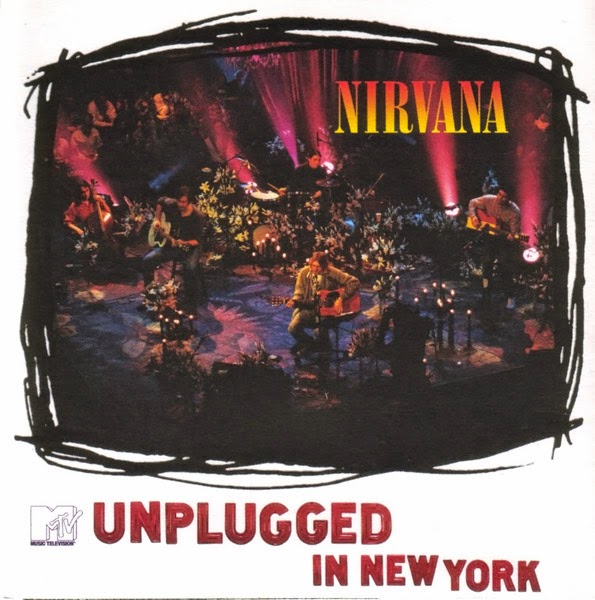
MTV Unplugged in New York

The Unplugged concerts certainly brought a different view of many music acts. Everybody from Roxette to Duran Duran and Queensryche taped MTV Unplugged specials in the Nineties. Nobody talks about any of those. Even Bob Dylan and Pearl Jam's Unplugged specials have largely been forgotten. Eric Clapton caused a big stir with his, but when is the last time anybody really played that thing straight through? At the end of the day, the only Unplugged with any real legs is Nirvana's. Taped in November of 1993 — five months before Kurt Cobain killed himself — the concert is one of the band's crowning achievements. They skipped most of the obvious hits (including "Smells Like Teen Spirit") and focused on covers of songs by Lead Belly, David Bowie, and the Meat Puppets. They even invited the Meat Puppets onstage for a few songs, even though few MTV viewers had ever heard of the group. It's impossible to say how Nirvana would have evolved had Kurt lived, but Unplugged in New York is proof positive they had plenty more to say.

Waiting For Columbus

Little Feat is one of those bands that can't be fully appreciated until you see them live. It's no surprise that their 1978 live disc Waiting for Columbus is the most beloved album in their vast catalog. Taped on their 1977 world tour, the double LP features extended arrangements of "Dixie Chicken," "Tripe Face Boogie," and other Little Feat standards. The Tower of Power horn section was playing with the band at the time, and their presence greatly enhances the material. Little Feat never became true household names like many of their peers, but anyone who spends time with this album will be quickly converted. On Halloween of 2010, Phish played the album straight through in Atlantic City, and then the next year Little Feat themselves performed it.

Made in Japan

I’m a crazy fan of Deep Purple. As a guy who loves a Hammond and any other keyboards you happen to have, just give me Jon Lord, a wizard. Other members of the band came and went, but that Hammond sound. Lip smackin’ good.

The classic Ian Gillan-led lineup of Deep Purple (dubbed Deep Purple Mark II by the fans) had only been on the road for three years when they hit Japan in 1972. It was a very fruitful time for the band. They had three incredible albums under their belts (In Rock, Fireball and Machine Head), and their live show was absolutely stunning. They had no intention of making a live album, but they were talked into releasing material taped in Osaka and Tokyo for a Japanese-only live album. Their label loved it and released it worldwide. These are the definitive versions of "Highway Star," "Child in Time," and other Deep Purple classics. They've done countless shows since in countless permutations, but they've never sounded quite this perfect.

Alive!

KISS was not an early favorite of mine. My cousin Chuck was a big fan, so I followed up on his recommendations. Over the years my opinion has shifted a bit. Still not a favorite band, but this is a favorite album.

I suppose to really understand the power of Kiss, you have to see them live. They built their reputation on the road, breathing fire, spitting blood, and hovering above the audience on wires. Nobody had ever seen anything like it. (Unless, that is, they'd seen Alice Cooper a few years earlier.) Their songs were also light years better onstage than on record, so they made the smart decision to tape a bunch of gigs in mid-1975. In typical Kiss fashion, they hedged their bets by doctoring the tapes in the studio afterwards. Today, nobody is quite sure what parts of Alive! were actually taped live. It hardly matters. The album was a monster success. It flew off the shelves and instantly made them one of the biggest bands in the world. Kiss gets a lot of crap these days as just too commercial — more businessmen than musicians. Much of it is deserved, but it's hard to deny that songs like "Cold Gin," “Deuce," and "Black Diamond" are classics. They've never sounded better than they did on Alive!

Get Your Ya-Ya’s Out!

The world’s greatest bar band has put out a lot of good albums and a lot of good shows. They’ve also had more comebacks than Richard Nixon. The Stones had been off the road for two long years before their 1969 American tour in support of Beggar's Banquet. During that time Mick Jagger and Keith Richards had been arrested on trumped-up drug charges, Their Satanic Majesties Request had failed to deliver, Brian Jones had left the group (and later died), and Mick Taylor became their new guitarist. They also recorded some of the finest music of their long career.

The tour was a long time coming, and up until Altamont it had been a complete triumph. They packed large venues all across the country and in many ways laid the groundwork for all arena tours that followed. This was also the time when bootlegs started popping up in record stores, most notable Live'r Than You'll Ever Be, which was taken from a 1969 Stones show in Oakland. The obvious move was to release their own live album from the tour. Get Yer Ya-Ya's Out! was taken from shows in Baltimore and New York, though some of the vocals were touched up later in the studio. The Stones have released many live albums since this one, but none have sounded quite as vital. That’s the point of a live album … vital!

Frampton Comes Alive!

Remember that line from Wayne's World 2? "Everybody has Frampton Comes Alive," Wayne said when going through some old vinyl. "If you lived in the suburbs, you were issued it. It came in the mail with free samples of Tide." In 1976 the live album — taped on Frampton's 1975 summer tour — spent 97 weeks on the Billboard charts, selling millions of copies.

The former Humble Pie frontman had some minor solo success before the release of the double live album, but nobody saw the explosion of Frampton Comes Alive! coming. Singles "Show Me the Way," "Baby, I Love Your Way,” and the 14-minute "Do You Feel Like We Do" went into super heavy rotation on radio. He was loved by teenage girls, and their older brothers. He owned the year 1976 like nobody else in rock, but by the time he dropped I'm In You the following year the madness had subsided. Ten years later he found himself playing guitar in David Bowie's backing band.

Live at the Fillmore East

Seven months before Duane Allman died in a motorcycle accident, the Allman Brothers Band played a two-night stand at New York's Fillmore East. The resulting live album captured the original lineup of the band at their absolute peak. "Whipping Post" lasts 23 minutes, while "Mountain Jam" goes well past half an hour — but in both cases the energy never lets up for an instant. Producer Tom Dowd is responsible for the glorious sound and clean mix of the LP. It's impossible to even tell that some songs were shortened, and in some cases he even combined two takes of the same song into one. A while back the group (now down to just two original members) played the whole set at the Beacon Theater in honor of the LP's 40th anniversary.

Live at Leeds

You know that the Who’s greatest fan … that’s me, is going to pick their legendary live album. In late 1969, Pete Townshend made one of the dumbest decisions of his life. The Who had been contemplating a live album to chronicle their Tommy world tour. Thirty-eight shows were recorded in pristine sound quality, but Pete didn't feel like going through all of them to find the best one. Instead, he decided to tape two upcoming shows at Leeds and Hull in England. He ordered sound engineer Bob Pridden to burn all 38 shows from 1969. "It was a dumb decision commercially and historically," Townshend writes in his memoir, Who I Am. "Bob faithfully destroyed them in a bonfire in his garden."

Thankfully, the shows at Hull and Leeds were recorded and preserved. Entwistle's bass didn't get properly recorded at the beginning of the Hull show, so the Leeds show was released. At the time, the group felt that Tommy had overshadowed all their other work. Live at Leeds didn't have a single cut from the rock opera, even though they played the bulk of it at the show. Instead, it featured covers like Mose Allison's "Young Man Blues," Johnny Kidd's "Shakin' All Over,” and Eddie Cochran's "Summertime Blues." Side two began with a 14-minute "My Generation." This was the Who at their absolute peak as a live band.

And that’s it. My take on the ten greatest live albums of all time … MY TIME. And what are your picks?

Sunday, March 1, 2015

Honda Four

The ubiquitous Honda Four. Honda first released their original four cylinder motorcycle, the CB750, in 1969. (Technically the design is termed an “inline, transverse mounted, four cylinder” engine.) This bike, with just a few changes, mainly going from single overhead cam to double overhead cam in 1979, was sold right into the 21st century. In 2007 Honda was still selling the CB750 (at least in Japan) and a larger version of the four cylinder bike is still being made in 2015.

The successful design spawned many imitations from other Japanese brands as well as sister bikes from Honda. The term “superbike” was pretty much coined to describe the CB750, and this bike cemented Honda as the greatest motorcycle company in the world. Although a few riders would identify some other brand, Honda pretty much owns the title for producing the most sophisticated and technically advanced bikes around. Certainly they are the biggest seller of motorcycles and motorbikes in the world, a title they’ve held for several decades.

One of my favorite bikes of all time was my Honda 550 Four. It fit me so well and was a great around town bike. I also rode it from Denver to Lewistown, Montana, but it was a bit small for that trip. The smoothness and sound of that engine were unsurpassed at that time, and the reliability was legendary.

Four cylinder motorcycles are not new. Belgian arms manufacturer FN Herstal, which had been making motorcycles since 1901, began producing motorcycles with inline-fours in 1905. The FN Four had its engine mounted upright with the crankshaft longitudinal. That is, the pistons were in line with the front and rear tires. Other manufacturers that used this layout included Pierce, Henderson, Ace, Cleveland, and Indian in the United States, Nimbus in Denmark, Windhoff in Germany, and Wilkinson in the United Kingdom.

In those days internal combustion engines were not high efficiency performers, so it took a large displacement to produce adequate horsepower. Yet these all put the cylinders longitudinal to keep the overall design of the bike narrow. This meant the rear cylinders didn’t get as much airflow as the front causing problems with cooling. There were also torque effects with this design.

The 1923 design by Carlo Gianini and Piero Remor was the engine that fist demonstrated the transverse mount. After a slow start — it took until 1926 to get the motor up and running — it became the basis of the OPRA 500 GP bike in 1928 and eventually turned into the Gilera Rondine in 1935. The layout was a winner, and that engine was the basis of Gilera’s racers right into the 1970s!

The modern inline four-cylinder engine, mounted across the frame, has become virtually the default layout for today’s large bikes. Sure, there are plenty of alternatives, but the transverse four is one of the designs that’s closest to perfection, whether it’s in a Yamaha M1, a Kawasaki Z1, or an old Honda CB750.

The original Honda four produced 68 HP at 8,500 rpm which propelled its 481 pounds to a top speed of 125 mph. (These figures vary slightly from year to model year and with the test organization. I never had one, so I can’t contradict these values.) When Honda first brought this bike to market they weren’t sure how successful it would be, so they didn’t invest in high quality tooling. Now those original CB750s with what is often miss-named as “sand cast” engines demand the highest amount on the restoration market, some in the $30,000 price range for a bike that cost around $1,500 when first released.

This first model had a dry sump, which means the oil is stored in an external tank. This allows the engine to be a little lower in the frame because the bottom oil pan doesn’t have to store a lot of oil. Dry sump designs also provide some additional cooling in the circulation of the oil to an external tank, and it is easy for the manufacturer or an after market supplier to add an oil cooler. Later variations of the original Honda four had the simpler wet sump design.

Under development for a year, the CB750 had a transverse, straight-four engine with a single overhead camshaft (SOHC) and a front disc brake, neither of which was previously available on a mainstream, affordable, production motorcycle. Adding to the bike's value were its electric starter, kill switch, dual mirrors, flashing turn signals, easily maintained valves, and overall smoothness and low vibration both underway and at a standstill. Ten years later Honda added dual overhead cams to the CB750, and later models, from 1991, included maintenance-free hydraulic valves. Many of these features were unique in 1969, and now are the norm for most performance machines.

The angled-forward 736 cc engine design used many lessons learned during Honda's days of racing multi-cylinder machines in the Sixties, although the roadster relied on a single overhead camshaft and two valves per cylinder, in contrast to the racers with their twin cams and four valves per cylinder. The original engine was slightly under square with a 61 mm bore and a 63 mm stroke with 9.0:1 compression. Equipped with 4 - 28 mm Keihin carbs, the overhead cam was driven by a chain with a manual adjuster. The primary drive is gear and the secondary drive is chain. Disc brake in the front 19” wheel and drum in the back 18” drive wheel.

In 1975 Honda added a newer trim version of the basic bike called the Super Sport or CB750F. Those models had Honda’s own Comstar wheels and were sold from ’75 to 79. My favorite from that era had a black engine and canary yellow paint. It was a very pretty bike with a four-into-one pipe and a nice tailpiece behind the seat.

In 1979 Honda released the new CB750F with a dual overhead cam. I am not a fan of the trim on this bike as the tank flows into the side covers which extend onto the back. One might consider that a very modern and clean design, but I guess I'm just old fashioned preferring the previous styling. The seat was also redesigned, but — again — I’m not a fan of the overall style. This model continued on to 1986. A slightly different model called the CB750F2 was released in 1992 and produced for five years.

The latest model of 750 Four was the Nighthawk which was produced from 1991 to 2003. Although the 700cc Nighthawk (sized to avoid the 45% tariff for larger bikes) had the same basic DOHC engine of the earlier CB750s, this bike had a 6-speed transmission, hydraulic valve lifters, shaft drive, front bikini mini-fairing, gear indicator, and 16" front wheel. In 1984, the bike retailed at a MSRP of $3,398.

In 2007 Honda Japan announced the sale of a new CB750 very similar to the models sold in the 1970s. Announced as the CB750 Special Edition that was in the silver colors of the CB50 AMA racer of the 1970s and the CB750. It was offered in three color schemes reminiscent of CB750s previously sold. These bikes were intended only for release in Japan. Will we ever see a brand new version of this popular bike? That is the question.

In ’81 Honda introduced the CB900F. Style was reminiscent of the 750 but the new 901cc engine added humph. With 95 HP at 9,000 rpm and the four Keihin 32mm constant velocity carburetors, this was a bike to be reckoned with. But things were changing in the early eighties, so this bike was only produced for two years.

You see, early in the 80s a certain motorcycle company in Milwaukee started to complain to their congressmen that they couldn’t compete with the influx of Japanese large iron and got congress to pass a tariff on bikes larger than 700cc. Honda responded with the CB700SC Nighthawks. These toned down bikes had 696 cc displacement and a top speed of 147 mph. Again Honda went a little Disneyland in their styling adding a squared off headlight and miniature fairing to the front many compared to a bra. They also replaced the chain drive with a shaft and upped the ante to a six-speed transmission.

1983 would prove to be the final tariff-free year for foreign motorcycle manufactures before implementation of the five-year tax on foreign motorcycles over 700cc. Honda released the CB1000C that year. This was a continuation of the CB900C in many ways, but carried additional displacement to its engine. Both “custom” and “cruiser” models were available. The 902 cc engine was increased to 973, but otherwise the bike was unchanged. Still a 5-speed transmission but with dual ranges. The rider could select between two sets of 5 gears to match requirements. The shaft drive and a lengthy 64 inch wheelbase delivered a stable ride, while the 608 pounds limited performance somewhat, although 121 mph was listed as top speed.

The follow-on Honda CB1100 is a 1,062 cc (64.8 cu in) air-cooled inline four-cylinder naked bike that was introduced by Honda in 2010 as a modern successor to the CB750. At introduction the motorbike was available in Japan, Australia and New Zealand; it was later introduced to Europe and the US in 2013.

The CB1100 is styled as a universal Japanese motorcycle. The model underwent a revision in 2014, gaining a sixth gear and new gauge cluster. Honda also released the CB1100 Deluxe, an upgraded variant on the standard CB1100.

That's a 2014 CB1100 in the picture at the start of this article. The 2015 looks the same. Here's what Honda says in their brochure:

Though the CB1100 pays homage to Honda's long line of capable, reliable and fun street bikes, we wouldn't look to the past without looking forward. This is a modern bike for riders that love to ride. Its 1140cc, fuel-injected inline four is powerful and smooth, its chassis and suspension are agile and responsive, and it's comfortable around town or on weekend rides. For 2014, we're offering a Deluxe model with even more features. It’s a bike a whole new generation of riders is going to appreciate.

In addition to the new six-speed transmission on all CB1100s, this year, there's a Deluxe model that adds twin exhaust pipes, a slightly larger fuel tank, and a stitched-look seat. The Deluxe model also comes with ABS [automated braking system].

Honda’s inline-fours are timeless — some of the best engines in all of motorcycling. The CB1100 carries that tradition and takes it to the next level, displacing 1140cc and featuring air cooling to look the way many think a bike should — why hide under a fairing?

This is the largest Honda went with this basic inline four design. They did produce a six-cylinder, inline engine powered bike from 1979-82 called the CBX, but that was more a demonstration of technology than a serious bike since Honda was making and selling plenty of water cooled large bikes in its Gold Wing line first introduced with an opposing four engine in 1974 which continued to increase in size until it was replaced by the six-cylinder version in 1987. Today Honda still makes cruiser and touring versions of the Gold Wing with a maximum displacement of 1832 cc. That’s one big bike, but not part of the inline four family.

Honda’s history seems to be a quest to produce a motorcycle for every particular want or need out there. How else do you explain the single cylinder “Tourist Trophy 500” and the various unusual designs of V-twins from horizontal like a Moto Guzzi to V-fours and water cooled designs of many shapes and sizes. Meanwhile, the inline, air-cooled four design was expanded on and new versions and sizes were released every few years.

After introducing the four-cylinder CB750 motorcycle in 1969, Honda followed with a string of lighter fours featuring engines as small as 350 cc (CB350 Four, CB500 Four), and the CB400F 408 cc Four, produced in 2 models.

The popular air-cooled four spawned smaller siblings starting with the CB500 released in 1972. It is similarly styled to the CB750, but smaller and lighter, with an output of 48 bhp and a manufacturer's specified top speed of 102 mph. This original design was produced for two years

Like the earlier CB750 it sported a single front hydraulic disc brake, rear drum brake, electric starter, and SOHC eight-valve engine. The four-into-four exhaust pipes echoed those of the CB750. It was deemed a better handling bike than the larger model, although it was still no featherweight at 443 lb dry.

Unlike the earlier dry sump CB750, the smaller bike has a wet sump engine. Also, the primary drives were different, the CB750 having a duplex chain, while the CB500 had a "Hy-Vo" Morse chain.

Several CB500 machines were entered in the Production TT races on the Isle of Man in the early 1970s. Bill Smith won the 1973 500 cc TT Production race (four laps) riding one, 8.2 seconds ahead of second place Stan Woods mounted on a Suzuki T500 two-stroke twin.

The CB500 was a 498 cc (30.4 cu in) displacement machine. In 1974 the Honda CB550 with a 544 cc (33.2 cu in) four-cylinder was produced until 1978 when it was replaced by the CB650 increasing displacement to 626 cc by boring out the 550 block. Honda added domed pistons and produced 63 hp @ 9,000 rpm. The CB650's performance was comparable to contemporary DOHC 750 cc motorcycles because of it being built on the lighter, more compact chassis of the CB550. It was Honda's last SOHC aircooled straight-four engine, which was a culmination of the engine technology of Honda up to that time.

Like the earlier CB500 the original CB550K had 4 exhaust pipes and 4 silencers. The CB550K went through some minor iterations, the last being the CB550K4. Shortly after the CB550K was introduced, a second version of the CB550 was offered, the CB550F "Super Sport”.

The Honda CB650 is a four-cylinder middleweight motorcycle manufactured from 1979 to 1985 by Honda. The machine was largely based on the Honda CB550 and had the same frame, speedometer, and tachometer as the Honda CB550 of the 70's.

In 1973, Honda downsized the venerable four yet again with a very sporty model called the CB350. This smallest version of the inline, air-cooled, transverse engine was a 347 cc motorcycle based on the larger versions of the day. The motorcycle was manufactured in Japan from 1972 to 1974. In 2012, Motorcycle Classics magazine said the 350F was "the smallest displacement multi-cylinder motorcycle ever to enter into full-scale production." There were no changes to the 1973 model, but Honda designated the 1974 bike the CB350F1.

Soon after production was discontinued, it was replaced by the CB400F. Although Honda had a 350 Twin that critics said was more powerful, lighter, and cheaper, many felt the 350 Four was faster and smoother running.

The apparent fact that Honda was “fine tuning” their product line is indicated by the fact that the CB350F wast the successor to the CB500F and was predecessor to the CB400F. The Honda CB400F was made by Honda from 1975 through 1977.

For the most part, the CB400F was simply an upgraded version of the 350 model from the previous year. The most striking change was the swoopy four-into-one exhaust system that snaked around the frame, converging into a single muffler on the right side of the bike. Check the end of this article for a picture of that fine exhaust system. Also noticeable were the angular fuel tank and flat cafe-style handlebars, all of which gave the bike a more racer-like look and feel than the rather pedestrian 350.

Although aimed at the sporting segment of the market, the four-stroke CB400F did not have the acceleration of the competition's two-strokes, particularly the triples from Kawasaki. But what the CB400F engine lacked in power it made up for in refinement, the small-displacement four-stroke being smoother, quieter and much more economical than the two-strokes. To help keep the engine in its power band, Honda employed a six-speed transmission — something of a rarity at the time.

The CB400F was a very successful motorcycle in club or privateer racing. Kaz Yoshima and other racers were able to take Honda's little 408 cc engine up to 490 cc and with the addition of other racer options, this small bore was considered a “giant killer.”

That is the evolution of the versatile and popular transverse, inline four from Honda. Over the nearly 50 years of its production it went from a single overhead cam design to DOHC. Honda added hydraulic valves, fuel injection, electronic ignition, and even some fairing as the basic design was improved and expanded. Four valves per cylinder and automatic primary chain adjustment are just a few of the performance and reliability enhancements added since the original CB750.

The transmission went from 5-speed to 6 and there was even an automatic transmission available at one time. The original CB750 pioneered disc brakes and the latest versions even add Automatic Braking Systems. (The first disc brake was actually on the CB450K3 model, and that led the way for the CB750 released that same year.)

Still for sale today, a popular 1100 cc version has continued its role as the successor to the first “superbike.” Although I personally find the larger Honda fours both too wide and with a seat that is a bit too high, leaving me looking at V-twin designs, the smoothness and power of this engine, as well as its superb reputation for performance and reliability makes it a very popular bike for current riders as well as nostalgic collectors.

Hard to imagine how old this basic design is. It's approaching 50 years since it was first produced. Also hard to imagine the impact the Honda Four had on the riding public. Many beautiful design examples exist, but my personal favorite is the serpentine bent pipes on the CB400F. No modern sculpture in the Louvre or the Metropolitan Museum brings as much emotion to me as that sculptured metal and the promise it holds for a fast and joyous ride. With a roar like a European sports car, a Honda Four will still turn heads even in this high-tech, computer saturated 21st century. I'll take one in the canary yellow please.

HONDA FOUR COMPARISONS


1973
CB350
1975
CB400F
1972
CB500
1969
CB750
1982
CB900F
1983
CB1100F
Disp. 325 cc
19.9 ci
408 cc
27.1 ci
498 cc
30.4 ci
736 cc
44.9 ci
901 cc
55.0 ci
1062 cc
64.8 ci
HP
@ rpm
36
10,500
43
8,500
48
8,500
68
8,500
95
9,000
108
8,500
Weight 328 412 443 481 514 536
MPG 55 50 45 35 32 30
0 - 60 sec 6.5 6.3 6.0 5.2 4.5 4.0
1/4 Mile Sec
Speed
15.0
80
14.7
89
14.1
92
13.3
105
11.8
110
11.1
118
Trans. 5-spd 6-spd 5-spd 5-spd 5-spd 5-spd
Top Speed 98 106 110 125 130 138
Price New $1100 $1200 $1270 $1495 $3495 $3698

CB500 updated to CB550 in 1974